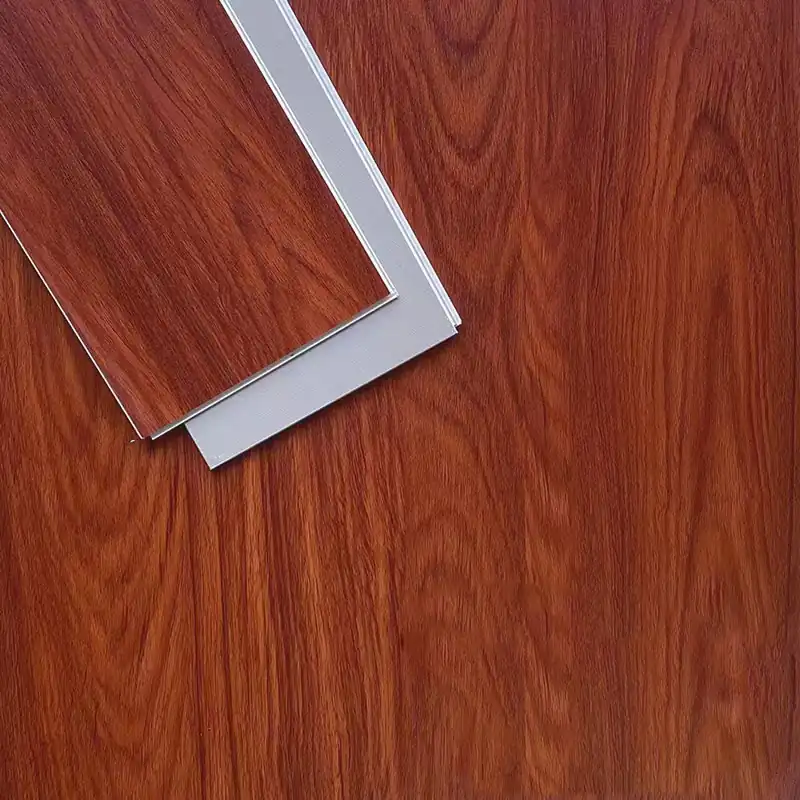
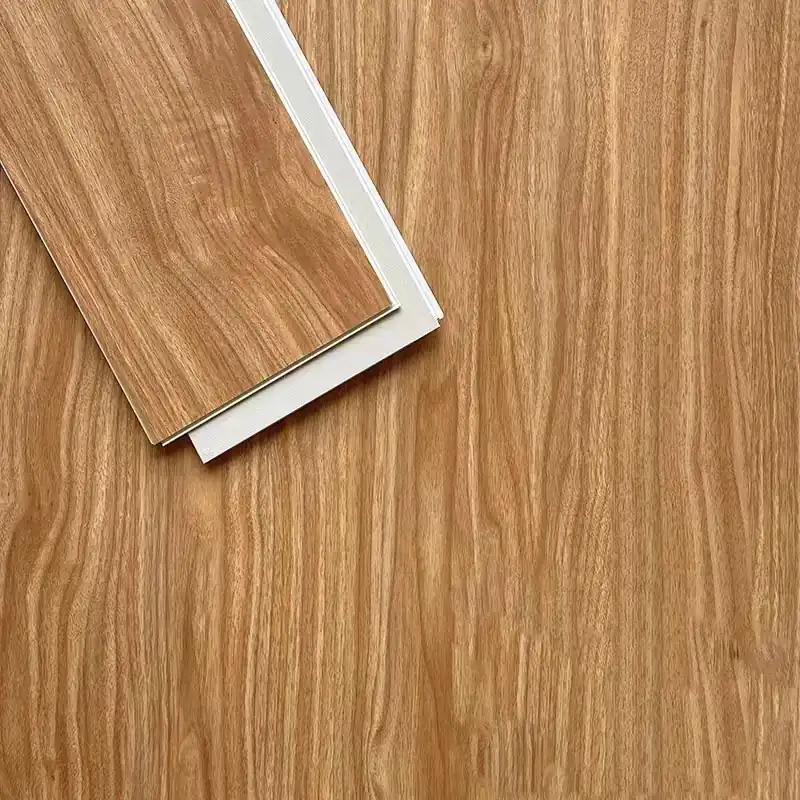
SPC-Fußboden in Holzoptik

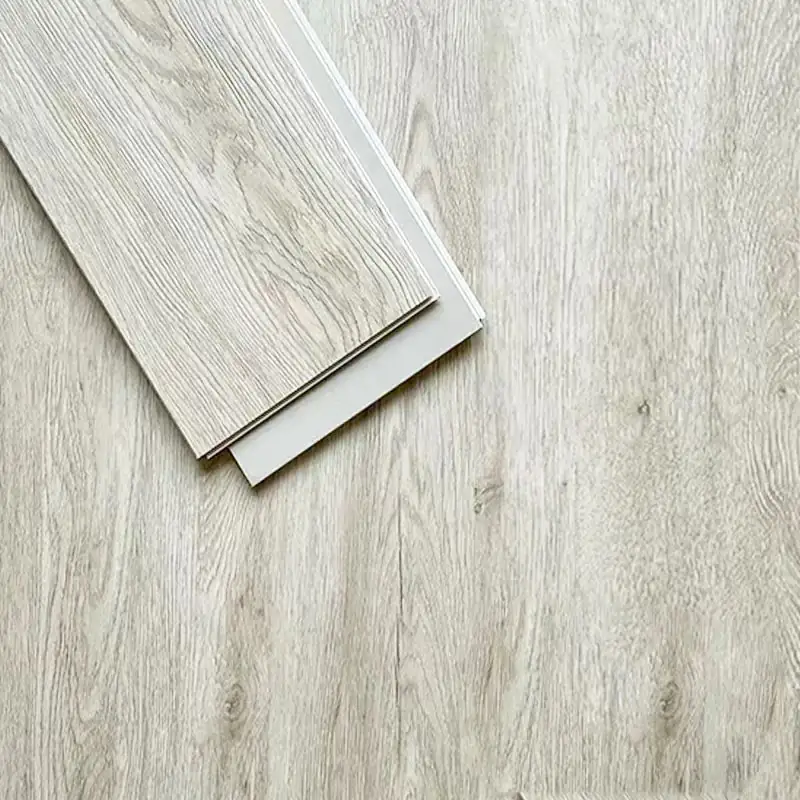
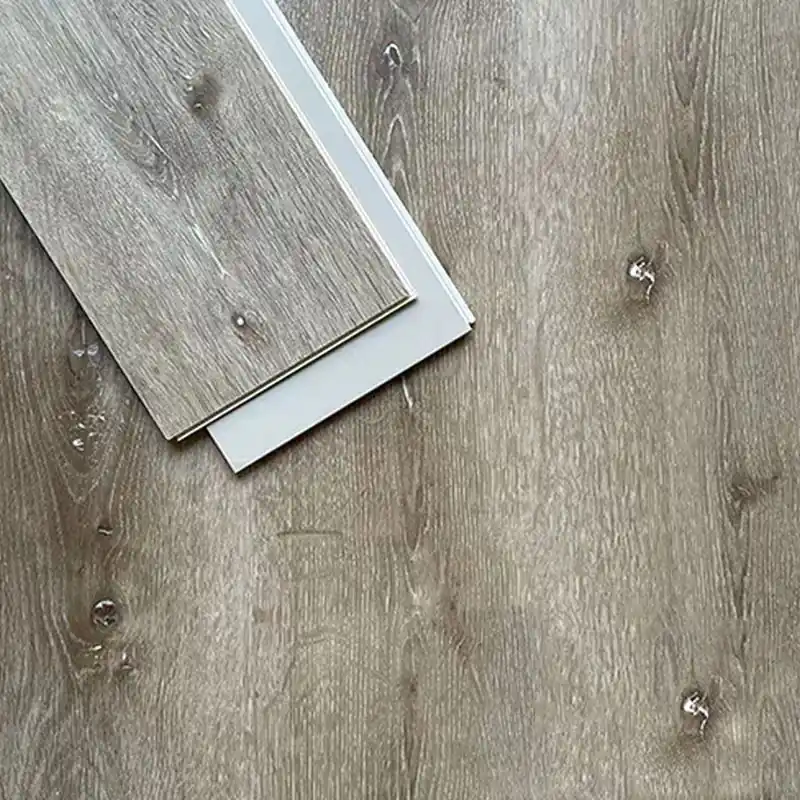
Wood Grain SPC Flooring – Oak Design Holzmaserung-SPC-Bodenbelagsstruktur Detailansicht der Oberfläche von Holzmaserung-SPC-Bodenbelägen SPC-Fußboden in Holzoptik – Eichendesign

SPC-Fußboden in Holzoptik

SPC-Bodenbeläge in Holzoptik sind eine strapazierfähige und wasserfeste Bodenlösung, die die natürliche Optik von Echtholz mit der Stärke der SPC-Technologie kombiniert und sich daher ideal für moderne Innenräume eignet.

Vorteile:

  • Realistische Holzmaserung für ein natürliches Erscheinungsbild
  • 100 % wasserdicht, geeignet für Küchen und Badezimmer
  • Äußerst strapazierfähig und widerstandsfähig gegen Kratzer und Flecken.
  • Stabile, starre Kernstruktur für dauerhafte Leistung
  • Einfache Klickmontage ohne Klebstoff oder Nägel.
  • Geringer Wartungsaufwand und einfache Reinigung
  • Perfekt geeignet für den privaten und gewerblichen Gebrauch.

Fehler: Kontaktformular wurde nicht gefunden.

Categories ,

What is Wood Grain SPC Flooring?

Wood Grain SPC Flooring ist eine Art von Vinylboden mit starrem Kern, der die natürliche Optik von Holz mit der Haltbarkeit der Stone Plastic Composite (SPC)-Technologie kombiniert.

Es besteht aus einem robusten SPC-Kern (Calciumcarbonat + PVC), der mit einer realistisch wirkenden Holzmaserung und einer schützenden Verschleißschicht versehen ist. Diese Konstruktion ermöglicht es, echtes Hartholz täuschend echt nachzuahmen und gleichzeitig eine deutlich höhere Leistung im täglichen Gebrauch zu bieten.
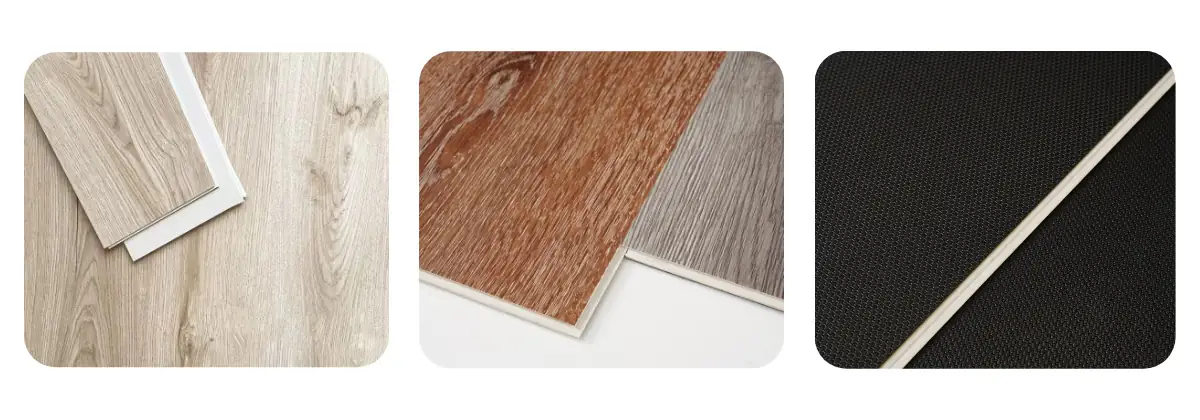
Ausstellungsstück für SPC-Bodenbeläge mit Holzmaserung und natürlicher Holzstruktur

Produktspezifikationen

Element Parameter
Material Stein-Kunststoff-Verbundwerkstoff (SPC)
Dicke 4 mm / 5 mm / 6 mm / 8 mm
Trageschicht 0,2 mm, 0,3 mm, 0,5 mm, 0,7 mm, 1,0 mm
Größe 6”×48” (150×1220mm)
7”×48” (182×1220mm)
9”×48” (230×1220mm)
9”×60” (230×1525mm)
Oberflächenstruktur Holzmaserung / Marmor / Teppich
Installation Click Lock System
Anwendung Zuhause, Büro, Geschäft, Hotel, Schule

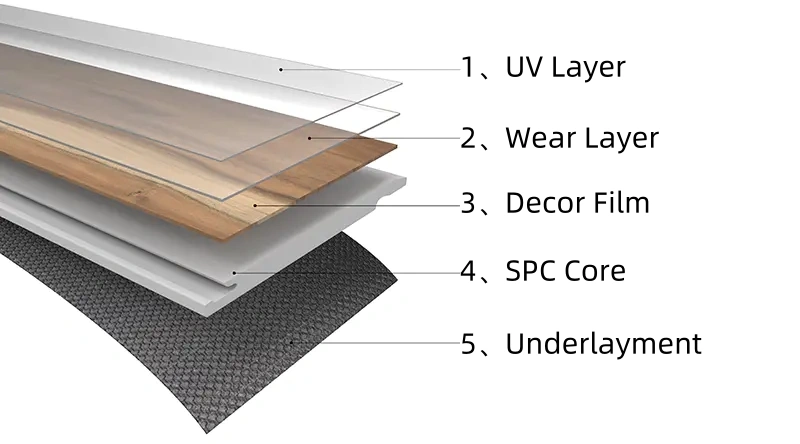
Die Struktur von SPC-Fußböden mit Holzmaserung

  1. UV-Schicht (UV-Beschichtung): Die oberste UV-Beschichtung schützt die Oberfläche vor Kratzern, Flecken und Ausbleichen. Sie verbessert zudem die Abriebfestigkeit und erleichtert die tägliche Reinigung, sodass der Boden sein ursprüngliches Aussehen behält.
  2. Nutzschicht: Die Nutzschicht bietet einen starken Schutz vor Abrieb, Stößen und starker Beanspruchung durch Fußgängerverkehr. Eine dickere Nutzschicht gewährleistet eine höhere Strapazierfähigkeit und verlängert die Lebensdauer des Bodenbelags.
  3. Dekorfolie: Diese Schicht verleiht SPC-Böden ihr realistisches Aussehen, beispielsweise in Holz-, Stein- oder Marmoroptik. Hochauflösende Drucktechnologie ermöglicht natürliche und stilvolle Designs für verschiedene Einrichtungsstile.
  4. SPC-Kern: Der SPC-Kern bildet die Hauptstrukturschicht und besteht aus Kalksteinpulver und PVC. Er bietet hervorragende Steifigkeit, 100%ige Wasserdichtigkeit und hohe Dimensionsstabilität und verhindert Ausdehnung oder Verformung.
  5. Unterlage: Die optionale Unterlage verbessert den Gehkomfort, reduziert den Geräuschpegel und optimiert die Wärmedämmung. Sie gleicht zudem kleinere Unebenheiten im Untergrund aus und erleichtert so die Verlegung.
SPC-Bodenstrukturschichten

Wichtigste Merkmale

100% wasserdicht

Der starre SPC-Kern ist absolut wasserdicht und eignet sich daher perfekt für Küchen, Badezimmer, Keller und Bereiche mit hoher Luftfeuchtigkeit.

Realistische Holzoptik

Eine fortschrittliche Drucktechnologie erzeugt eine äußerst realistische Holzmaserung, die die Muster und Farben natürlicher Harthölzer detailgetreu nachbildet.

Extrem langlebig und kratzfest

Die hochdichte Nutzschicht schützt vor Kratzern, Dellen und starker Beanspruchung im Alltag – ideal für Haushalte mit Haustieren und Kindern.

Sound Reduction

Die integrierte Konstruktion trägt zur Geräuschreduzierung bei und sorgt für ein angenehmeres Gehgefühl.

Umweltfreundlich und sicher

Formaldehydfreie, ungiftige Materialien gewährleisten ein sicheres Raumklima für Familien.

Einfache Klickinstallation

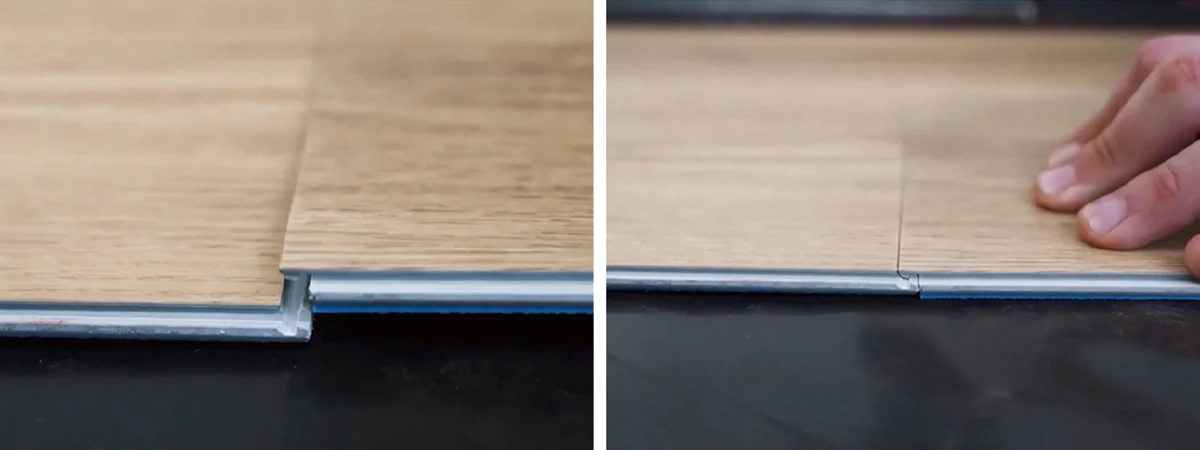
Das Uniclick-System ermöglicht eine schnelle Montage ohne Klebstoff oder Nägel und spart so Zeit und Arbeitskosten.

Vorteile von SPC-Fußböden mit Holzmaserung

<p、>>Diese Art von Bodenbelag bietet gegenüber herkömmlichen Bodenbelägen mehrere Vorteile:

  • Realistischere Holzoptik als Laminatböden
  • Wasserdichter als natürliche Holzböden
  • Temperaturstabiler als Massivholzböden
  • Kostengünstiger als herkömmliche Hartholzböden
  • Easier mainteanance and cleaning with no special treatment required
  • Geeignet für private und gewerbliche Nutzung

Es ist die ideale Bodenlösung für Bereiche, in denen Feuchtigkeitsbeständigkeit, Langlebigkeit und die natürliche Ästhetik von Holz unerlässlich sind.

Anwendungen

SPC-Fußböden in Holzoptik eignen sich für eine Vielzahl von Innenräumen:

  • Wohnzimmer
  • Schlafzimmer
  • Küche
  • Badezimmer
  • Büro
  • Hotel- und Gewerbeflächen
  • Einzelhandelsgeschäfte

Durch seine Vielseitigkeit eignet es sich sowohl für stark frequentierte als auch für dekorative Innenräume.
Installation und Wartung

Installation

  • Geeignet für die schwimmende Klickmontage
  • Kann auf Beton, Fliesen oder bestehenden Böden verlegt werden.
  • Erfordert einen ebenen und trockenen Unterboden.

Wartung

  • Regelmäßig fegen oder staubsaugen.
  • Mit einem feuchten Mopp reinigen
  • Vermeiden Sie aggressive chemische Reinigungsmittel.
  • Kein Wachsen oder Polieren erforderlich


SPC-Bodenbelag Klick-System

Warum sollten Sie sich für unseren SPC-Fußboden in Holzoptik entscheiden?

Unsere SPC-Fußböden in Holzoptik werden unter strengen Qualitätskontrollstandards hergestellt, wodurch Folgendes gewährleistet wird:

  • Stabile Farbkonsistenz
  • Hohe Dimensionsstabilität
  • Ausgezeichnete Verschleißfestigkeit
  • Zuverlässige Leistung des Verriegelungssystems

Wir unterstützen OEM/ODM-Anpassungen für globale Distributoren und Projektentwickler.
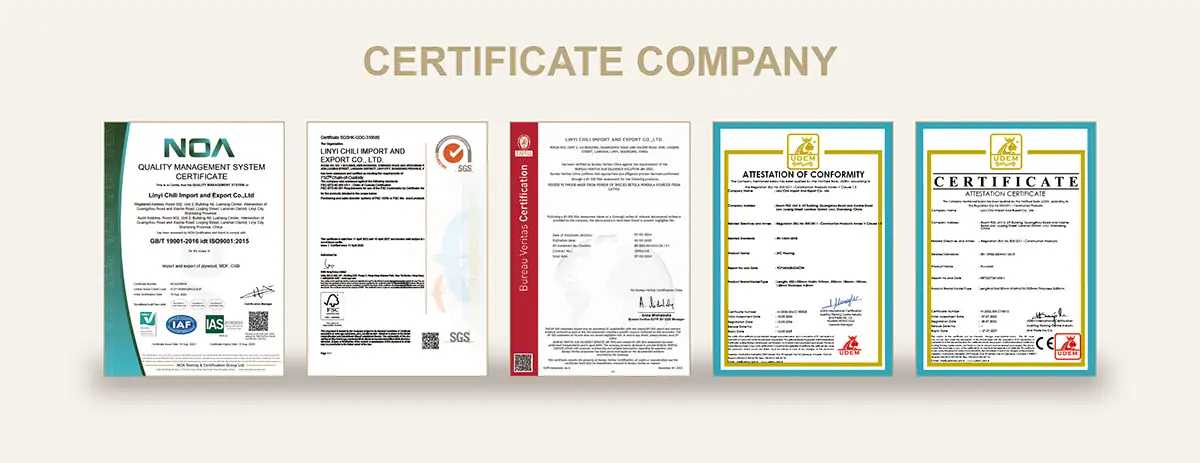
Zertifikate

Häufig gestellte Fragen (FAQ)

Kann SPC-Fußboden sich ausdehnen oder zusammenziehen?

SPC flooring has very low expansion rate due to its rigid core structure, ensuring high stability.

Ist SPC-Fußbodenbelag mit Holzmaserung für Haushalte mit Haustieren und Hunden geeignet?Ist SPC-Fußbodenbelag mit Holzmaserung für Haushalte mit Haustieren und Hunden geeignet?

Yes, it is scratch-resistant and waterproof, making it ideal for homes with pets.

Ist es für Fußbodenheizung geeignet?

Ja, es ist mit den meisten Fußbodenheizungssystemen kompatibel.

Wie lange hält SPC-Fußbodenbelag?

Bei ordnungsgemäßer Pflege kann es 15–25 Jahre oder länger halten.

  1. TOOLS NEEDED
    • Double-sided mallet
    • Tapping block
    • Utility knife
    • Vinyl plank cutter (optional)
    • Knee pads
    • 3mm spacers
    • A pencil
    • Measuring tape
    • A level
    • Carpenter’s square
  2. PLANKS NEEDED TO COMPLETE YOUR PROJECT Measure the length and width of your room. If the room has alcoves or offsets, measure these separately. This will give you the square footage of the room. Purchase a minimum of 10% extra to cover mistakes, trimming and for future needs or replacement. Most installations require about 10% overage. However, this can vary depending upon the room size and layout. Do not install over Carpet or Carpet Pad. This product is not suitable for any outside use, sunrooms, solariums, or saunas. Exposure to long-term direct sunlight can cause damage to your floor.
  3. PRIOR TO INSTALLATION CHECK THE PLANKS BEFORE INSTALLING THEM TO BE SURE OF APPEARANCE Colour, shade or texture variations between samples, print colour photography & the actual material are not warranted. Mix & install planks from several different cartons to minimize shade variations. Planks should always be inspected for any dye lot variations. We will not warrant that different dye lots will match each other. We maintain strict quality control at the factory, but it is a good idea to check each plank for blemishes or flaws.ACCLIMATE Flooring BEFORE INSTALLATION You must place vinyl horizontally in the room where it will be installed for 48 hours prior to installation. Maintaining an optimum temperature between 16°C to 27°C and a humidity range of 30-50% is recommended during installation and life of floor. Do not remove the planks from the case during this acclimation period
  4. SUBFLOOR PREPARATION The subfloorsurface must be smooth, flat dry, clean, and solid. Carpetstaples or adhesive residue must be removed to ensure proper installation. Subfloorsshould be flat within a tolerance of 4.8mm per 3m. Any unevenness over 4.8mm must be sanded down or filled with a floor leveller. Voids or humpsin the subfloor will prevent vinyl from locking properly. Subfloors must be carefully checked for moisture problems. Any moisture problems need to be addressed prior to installation. New concrete floors need lo cure for a minimum of 60 days.
  5. MOISTURE & TEMPERATURE It is the contractor’s as well as the installer’s responsibility to test all concrete substrates, both new and old, for moisture content to determine if it is sufficiently dry to install flooring. – Maximum level per CaC1 test method is 2.27kg/453.6kg in 24 hours. – Maximum level for ASTM2170 i-SITU Relative humidity test method is 85%. – Relative humidity levels should never exceed 85%. Moisture will not damage the flooring, but it can get in walls & structure of the home and create an unhealthy environment. NOTE: SPC Flooring does not warrant or guarantee unsatisfactory installations due to the presence of excessive alkali, moisture, or hydrostatic pressure in subfloors. SPC floors have good thermal resistance characteristics; however, they are not designed for prolonged exposure to high temperatures.

    Here are a few points to consider:

    1. Temperature Limits: Most SPC flooring manufacturers recommend avoiding exposure to temperatures above 27-30 degrees Celsius, as this can lead to deformation or damage to the material.
    2. Installation Issues: When installing SPC flooring, it’srecommended to adhere to the temperature guidelinesto avoid problemsrelated to expansion and contraction of the material.
  6. OVER HYDRONIC RADIANT HEAT Flooring can be Installed over Hydronic radiant heat if the following guidelines are followed: – Complete system must be operational for a minimum of one week.- System should be turned off 72 hours prior to installation of Aquarius flooring and remain off 72 hours after installation is complete. – Turn system back on to its normal room temperature setting.- The subfloor surface must never exceed 30°C throughout the life of the floor. – Flooring and adhesive should never come in direct contact with heating system.
  7. UNDERLAYMENT The Flooring (If does not have attached pad) can be installed over approved dense sound underlayment. Must tape seams with waterproof duct tape. Do not use any additional underlayment if Flooring already has attached underlayment.
  8. INSTALLATION
    1. Start in a Corner: Begin in a corner of the room, placing spacers between the wall and the first plank to maintain an expansion gap.
    2. Laying the First Plank: Carefully align the first plank and gently tap it into place using a rubber mallet and tapping block.
    3. Continue Adding Planks: Install the next plank by angling it slightly and snapping it into the groove of the first plank. Continue this process, ensuring each plank is firmly in place.
    4. Cutting Planks: Measure and mark where cuts are needed. Use a utility knife to score the plank and then snap it along the line. A fine-tooth saw can also be used for complex cuts.
    5. Stagger the Seams: Make sure to stagger the seams by at least 6 inches between adjacent rows for a more natural and stable floor.
    6. Fitting Around Obstacles: When reaching obstacles like door frames or pipes, measure and cut the planks to fit. Always leave a small expansion gap around these areas.
    7. Final Row: For the last row, measure the gap and cut the planks to fit. It might be necessary to use a pull bar to snugly fit the last row of planks.
    8. Finishing Touches: Once all planks are laid, remove the spacers. You can add baseboards or quarter-round molding to cover the expansion gaps and enhance the room’s appearance.
  9. BASIC CLEANING Once all traces of adhesive have been removed, the floor should be dry vacuumed to remove all dust and loose debris. Damp mop as needed using clean water and diluted Ph. Neutral cleaner in cool water or ready to use spray cleaner that will not leave a residue. Do not use harsh cleaners or chemicals on floor. Do not use abrasive scrubbing tools, detergents, caustic cleaners, abrasive cleaners or „mop and shine“ products. After 5-10 minutes, all dirt and residue of the cleaning agent should be removed; the floor should be rinsed with a damp mop and allowed to dry. Overtime floors may begin to lose their lustre and may require an application of floor polish. When and where you apply the floor polish will depend on the traffic the floor receives.

Related Products

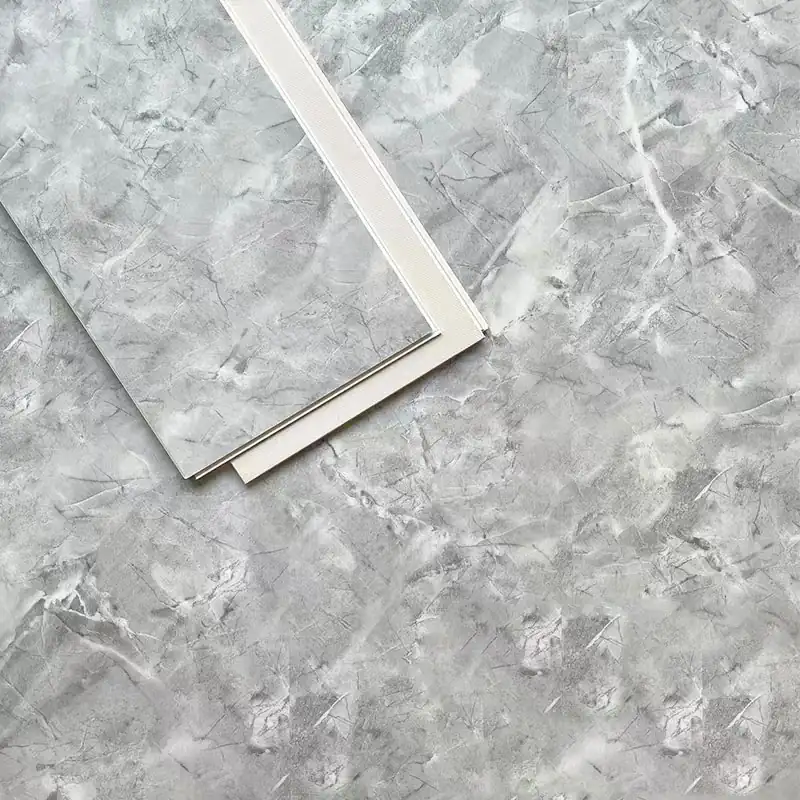
Stone Pattern SPC Flooring - Close-up of Marble Texture
SPC-Bodenbelagsausstellung mit moderner, wasserfester Oberflächenbehandlung