SPC flooring subfloor requirements are essential to a successful installation. Before installing SPC flooring, check whether the subfloor is flat, dry, stable, and clean. Even though SPC flooring has a rigid core and excellent water resistance, an unsuitable subfloor can affect locking joints, installation quality, and long-term performance.
For contractors, flooring distributors, and project buyers, understanding SPC flooring subfloor requirements helps reduce installation problems and avoid unnecessary repair costs. This guide explains how to inspect the subfloor, identify common issues, and prepare the surface before installation.
What Are the Main SPC Flooring Subfloor Requirements?
SPC flooring can be installed over suitable concrete and other approved subfloor types, provided they meet the manufacturer’s installation requirements. Before starting, check four essential conditions:
- Flatness: The surface should be even, without significant high spots or depressions.
- Moisture: The subfloor should meet the moisture limits specified for the flooring system.
- Stability: The surface must be firm, structurally sound, and free from loose material.
- Cleanliness: Dust, grease, debris, and unsuitable adhesive residues should be removed.
These requirements apply to both residential and commercial projects. A visually clean floor is not necessarily ready for installation, so a systematic inspection is recommended.
For product specifications and available options, explore YPRO SPC Flooring.
How Flat Should a Subfloor Be for SPC Flooring?
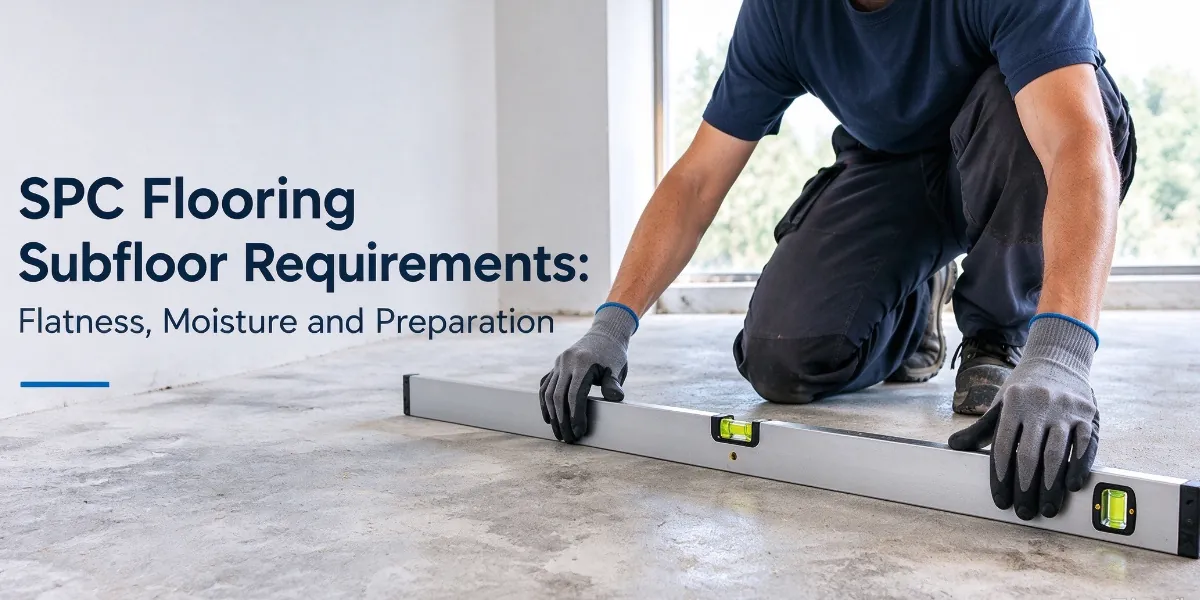
Subfloor flatness is one of the most important factors in SPC flooring installation. Although the rigid core provides structural stability, it cannot compensate for significant unevenness beneath the planks.
High spots may create pressure points, while depressions can leave unsupported areas under the flooring. Depending on the severity, these conditions may contribute to movement, clicking sounds, or stress on the locking joints.
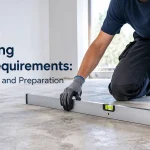
To check flatness before installation:
- Place a long straightedge across different areas of the floor.
- Identify gaps beneath the straightedge and any raised sections.
- Mark uneven areas that require correction.
- Recheck the surface after repairs.
The acceptable tolerance depends on the specific SPC product and its installation instructions. Avoid applying one universal flatness limit to every flooring system. Grind down suitable high spots or use a compatible leveling compound to correct low areas before proceeding.
How to Check Concrete Subfloor Moisture
Concrete subfloors require particular attention because they can retain moisture even when the surface appears dry. Excess moisture may affect certain installation materials, underlayments, adhesives, and the surrounding building assembly.
SPC flooring itself has a waterproof core, but this does not eliminate moisture risks associated with the subfloor.
Before installation, consider the following checks:
- Confirm that new concrete has completed the required curing period.
- Inspect for damp patches, water stains, or signs of moisture intrusion.
- Use an appropriate concrete moisture testing method when required.
- Investigate the source of persistent dampness before covering the surface.
Follow the flooring manufacturer’s moisture limits and any requirements specified for the subfloor preparation products. Where a moisture barrier is necessary, ensure that it is compatible with the flooring system and installation method.
Do not assume that a waterproof plank can be installed safely over a persistently damp concrete slab.
How to Repair Cracks and Uneven Areas
Cracks, loose patches, and damaged concrete should be evaluated before installing SPC flooring. Minor surface imperfections may be repairable with a suitable patching compound, but structural movement or recurring cracks require further investigation.
Start by identifying the type and extent of the damage. Remove loose material and repair minor defects using products approved for the existing substrate and flooring application. Allow repair materials to dry or cure according to their instructions.
For significant cracks, movement, or suspected structural problems, consult a qualified professional before installation.
Remember that a leveling compound is intended to correct suitable surface irregularities, not to resolve underlying structural issues.
How to Prepare the Subfloor Before Installation
Once the initial inspection is complete, prepare the surface so that the flooring can be installed according to the manufacturer’s instructions.
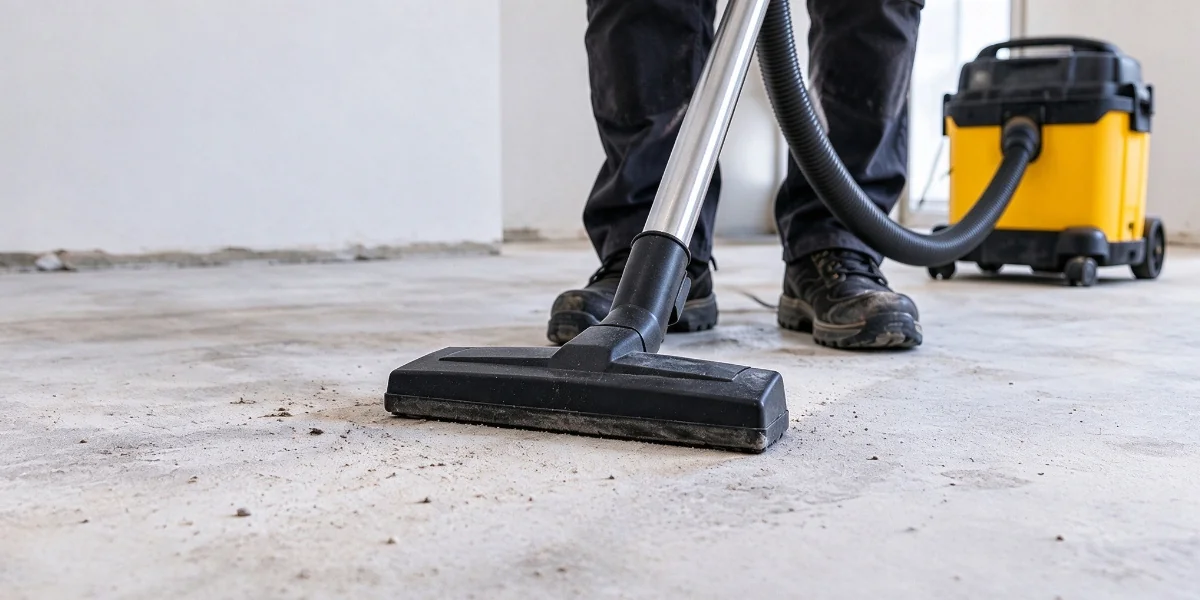
First, remove dust, dirt, grease, loose particles, and unsuitable adhesive residues. Vacuuming is particularly useful because small particles can interfere with a clean installation.
Next, confirm that repaired areas are fully cured and that the surface remains stable. Check the moisture condition again if necessary, especially after cleaning or other preparation work.
Finally, review the installation environment, including room temperature, material acclimation requirements, and underlayment compatibility. Not every SPC product requires the same preparation procedure, so consult the relevant technical documentation before beginning.
Proper preparation provides a more reliable foundation for the click-lock system and helps reduce avoidable installation issues.
SPC Flooring Subfloor Inspection Checklist
Before laying the first plank, use this checklist to confirm that the surface is ready:
- The subfloor meets the required flatness tolerance.
- High spots and depressions have been corrected.
- Concrete moisture meets the specified limits.
- Cracks and damaged areas have been assessed and repaired where appropriate.
- The surface is clean and free from loose debris.
- The substrate is stable and suitable for the installation method.
- Underlayment and moisture protection meet product requirements.
- Room conditions comply with the manufacturer’s instructions.
If any requirement remains unresolved, address it before installing the flooring.
How Do Subfloor Conditions Affect SPC Flooring Expansion?
Subfloor preparation and expansion clearance are two different parts of a successful installation. A flat, stable surface supports the planks, while appropriate perimeter gaps allow a floating floor to accommodate normal dimensional movement.
Even though SPC flooring offers good dimensional stability, it can still expand or contract slightly as environmental conditions change. Installing it without sufficient clearance may create pressure around walls and other fixed structures.
For more information, read our guide to SPC Flooring Expansion, which explains the causes of dimensional movement and the importance of following the manufacturer’s gap requirements.
Conclusion
Meeting the main SPC flooring subfloor requirements is essential before installation. A flat, dry, clean, and stable surface helps support the locking system and reduces the risk of avoidable installation problems.
For contractors, distributors, and project buyers, checking flatness, testing concrete moisture where required, repairing defects, and confirming material compatibility should all form part of the preparation process.
Before starting a project, review the product’s installation instructions and confirm any project-specific requirements. Contact YPRO to discuss SPC flooring specifications and suitable solutions for your next flooring project.