Clean SPC wall panels regularly to keep bathrooms, kitchens, living rooms, commercial interiors, and other spaces looking fresh and hygienic. SPC wall panels are waterproof, durable, and easy to maintain, but regular cleaning is still important to prevent dirt, stains, soap residue, and dust from building up on the surface.
The good news is that cleaning SPC wall panels is simple and does not require expensive products. In most cases, warm water, a soft cloth, and a mild cleaner are enough.
This guide explains how to clean SPC wall panels, what cleaners to use, how to remove common stains, and which cleaning methods you should avoid.
Why Are SPC Wall Panels Easy to Clean?
SPC wall panels have a dense, water-resistant surface that does not easily absorb moisture, dirt, or everyday spills. Compared with traditional painted walls, wallpaper, or some porous wall materials, SPC panels generally require less maintenance.
Their smooth decorative surface also makes routine cleaning easier. Dust, fingerprints, water marks, and light stains can usually be removed with a damp microfiber cloth.
However, the exact cleaning method can depend on the panel’s surface finish and the type of stain.
What Do You Need to Clean SPC Wall Panels?
For everyday SPC wall panel cleaning, you only need a few basic supplies:
- Warm water
- Mild liquid detergent or neutral cleaner
- Microfiber cloth
- Soft sponge
- Soft-bristle brush for textured surfaces
- Dry towel
Avoid using abrasive pads, hard brushes, or aggressive chemical cleaners unless the panel manufacturer specifically recommends them.
How to Clean SPC Wall Panels Step by Step
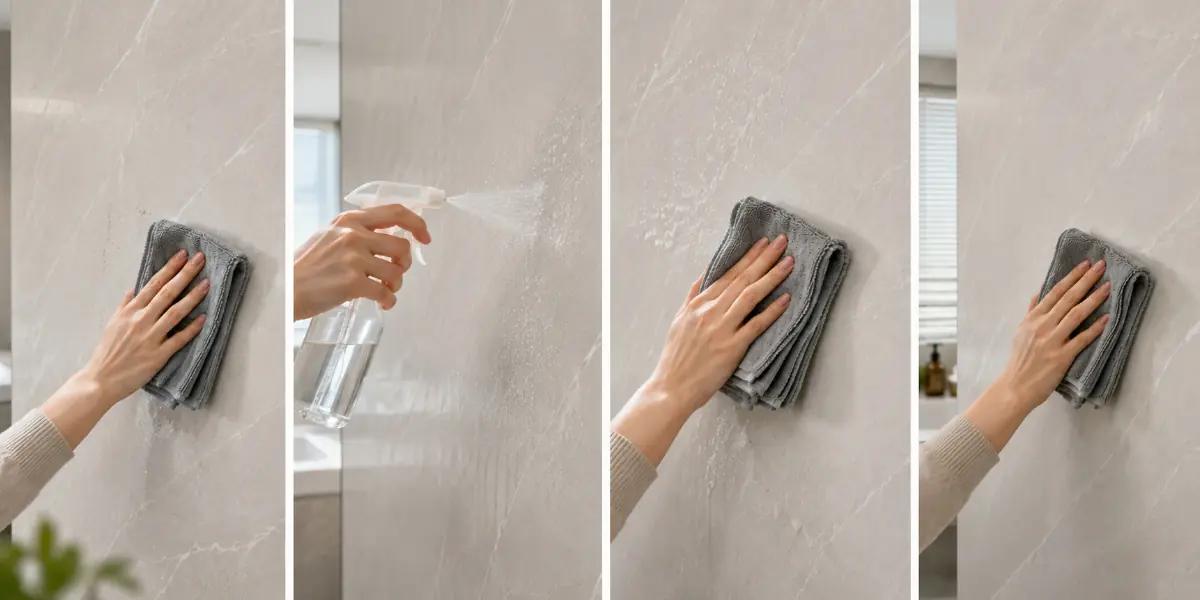
Step 1: Remove Dust and Loose Dirt
Before using water or cleaner, remove loose dust and dirt from the wall surface.
You can use a dry microfiber cloth, soft duster, or vacuum cleaner with a soft brush attachment.
This step is particularly important for textured SPC wall panels because loose particles can become trapped in the surface texture.
Step 2: Prepare a Mild Cleaning Solution
Mix a small amount of mild detergent with warm water.
You do not need a highly concentrated cleaning solution. A mild solution is usually sufficient for removing everyday dirt, fingerprints, and light grease.
For commercial projects or large wall areas, follow the cleaning product manufacturer’s dilution instructions.
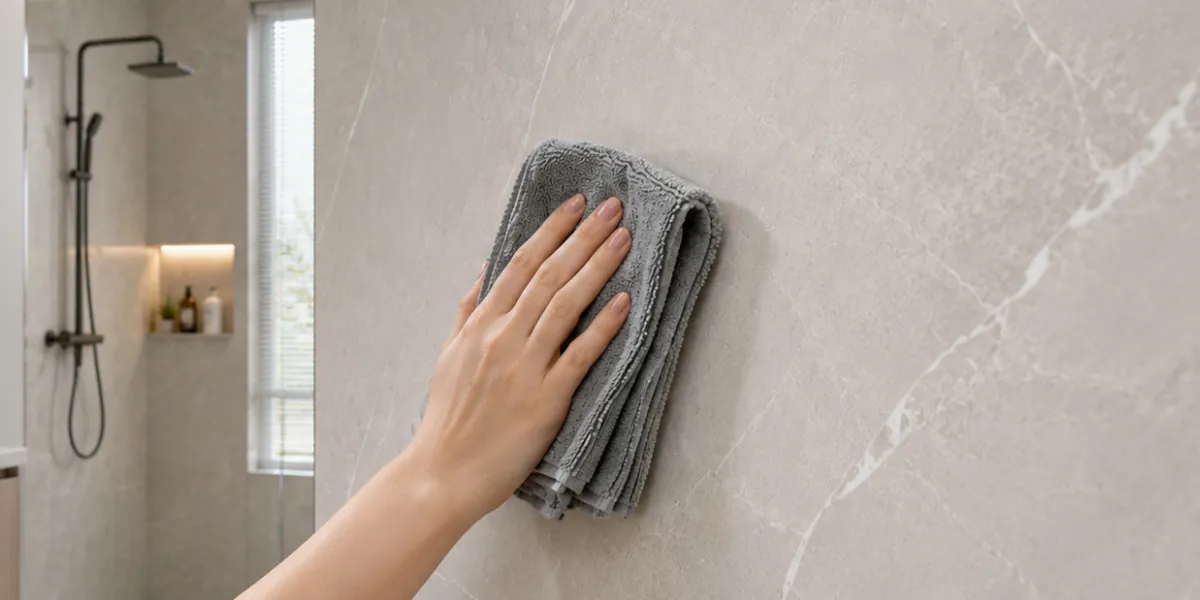
Step 3: Wipe the SPC Wall Panels
Dip a microfiber cloth into the cleaning solution and wring it out well.
Wipe the panel from top to bottom using gentle, overlapping movements.
For heavily soiled areas, allow the mild cleaning solution to sit on the surface briefly before wiping. Do not leave excessive water on the wall.
Step 4: Clean the Joints and Edges
Pay attention to panel joints, corners, edges, and areas around fixtures.
Dirt and soap residue can accumulate in these areas over time.
Use a soft-bristle brush or damp microfiber cloth to clean difficult areas. Avoid aggressive scrubbing that could damage the decorative surface or sealant around the joints.
Step 5: Rinse and Dry
After cleaning, wipe the wall with a clean damp cloth to remove any remaining detergent.
Then use a dry microfiber towel to remove excess moisture.
Although SPC wall panels are highly water resistant, keeping the surface dry helps reduce water marks and keeps the finish looking cleaner.
How to Remove Common Stains from SPC Wall Panels
Different stains may require slightly different cleaning methods.
Fingerprints and Light Dirt
For fingerprints, dust, and everyday dirt, simply use a damp microfiber cloth.
If the marks remain, add a small amount of mild detergent to warm water and wipe the surface again.
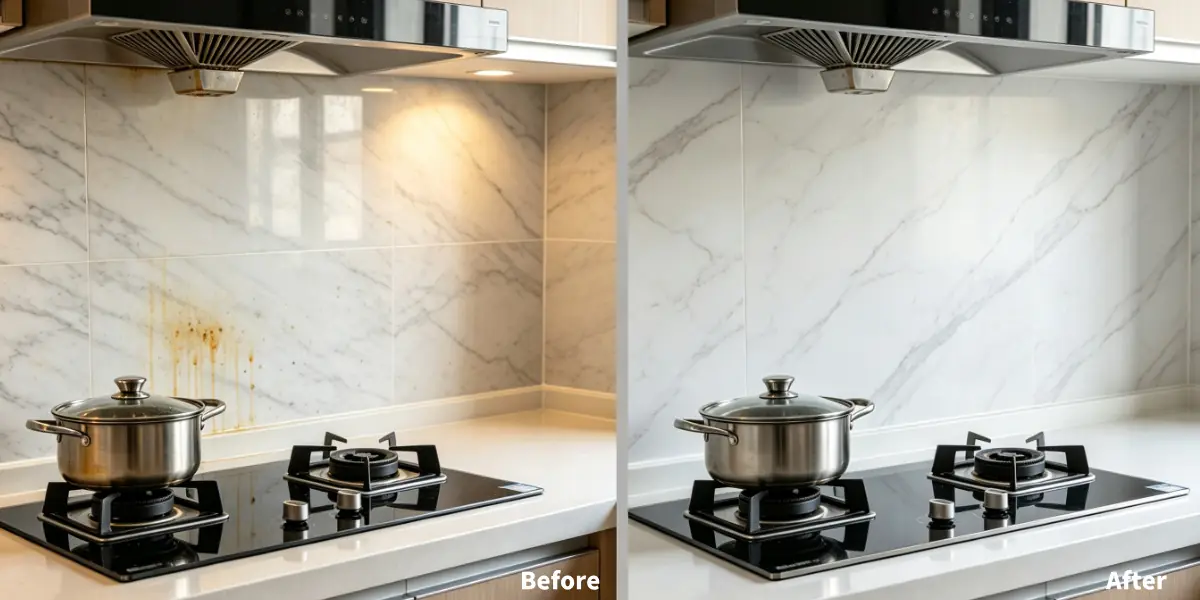
Grease and Kitchen Stains
Kitchen walls can accumulate cooking oil and grease.
Start with warm water and a mild degreasing cleaner. Apply it to a soft cloth rather than directly soaking the wall.
Gently wipe the affected area and then rinse with a clean damp cloth.
Avoid strong solvents unless they are confirmed to be compatible with your specific SPC wall panel.
Soap Scum and Water Marks
SPC wall panels are often used in bathrooms, where soap residue and hard-water marks can appear.
For light buildup, warm water and a mild neutral cleaner are usually enough.
For more stubborn deposits, use a cleaner specifically designed for the panel surface and test it on a small hidden area first.
Mold and Mildew
SPC wall panels themselves are resistant to moisture, but mold can still develop on accumulated dirt, sealant, joints, or surrounding surfaces when an area remains damp and poorly ventilated.
Clean the affected area with an appropriate household mold cleaner that is confirmed safe for the panel and surrounding sealant.
More importantly, identify the source of persistent moisture. Improving ventilation and drying the bathroom can help prevent mold from returning.
Can You Use Bleach on SPC Wall Panels?
It is better not to use concentrated bleach directly on SPC wall panels unless the manufacturer specifically states that it is safe.
Strong chemicals may affect the decorative finish, color, protective coating, or sealant.
If a disinfectant or bleach-based cleaner is necessary, check the panel manufacturer’s cleaning instructions and dilute the product according to its label.
When in doubt, test the cleaner on a small, inconspicuous area first.
Can You Use Vinegar on SPC Wall Panels?
Vinegar is sometimes used as a household cleaner, but it should not automatically be considered safe for every SPC wall panel.
Some SPC panels have different surface coatings and decorative finishes. Repeated exposure to acidic cleaners may affect certain finishes or sealants.
For regular SPC wall panel cleaning, a mild neutral cleaner and warm water are the safer general choice.
What Cleaners Should You Avoid?
To protect the appearance and service life of SPC wall panels, avoid aggressive cleaning methods.
Do not use:
- Abrasive powders
- Steel wool
- Hard scouring pads
- Very hard brushes
- Strong solvents
- Highly concentrated acids
- Highly concentrated alkaline cleaners
- Unapproved industrial chemicals
You should also avoid excessive pressure when scrubbing stains.
The goal is to remove the contaminant, not aggressively scrub the panel surface.
How Often Should You Clean SPC Wall Panels?
The ideal cleaning frequency depends on where the panels are installed.
| Application | Recommended Cleaning |
|---|---|
| Living room | Dust and wipe as needed |
| Bedroom | Every few weeks or as needed |
| Kitchen | Weekly or when grease appears |
| Bathroom | Regularly, especially around wet areas |
| Commercial space | Based on traffic and usage |
| High-traffic areas | More frequent spot cleaning |
For most residential applications, regular light cleaning is better than occasional aggressive cleaning.
How to Maintain SPC Wall Panels
Good maintenance can help preserve the appearance of SPC wall panels for many years.
1. Clean Spills Quickly
Do not allow coffee, oil, sauces, cosmetics, or other staining substances to remain on the surface for a long time.
Wipe spills as soon as possible.
2. Keep Wet Areas Ventilated
In bathrooms and other humid environments, good ventilation is important.
Use exhaust fans or improve airflow to reduce persistent humidity.
3. Do Not Scrub Too Hard
Most everyday dirt can be removed with gentle wiping. Excessive scrubbing is unnecessary and may damage the surface finish.
4. Check the Joints Regularly
Inspect panel joints, corners, and sealant around wet areas.
If sealant becomes damaged or separated, repair it promptly to help prevent water from entering behind the wall panels.
5. Follow the Manufacturer’s Instructions
Different SPC wall panels can have different decorative coatings and surface finishes.
Always follow the cleaning and maintenance recommendations supplied by the manufacturer.
Cleaning SPC Wall Panels vs. Traditional Wall Materials
One of the major advantages of SPC wall panels is their relatively simple maintenance.
Painted walls can show stains and may require repainting. Wallpaper can be difficult to clean when exposed to moisture. Some traditional wall materials can also absorb water or require more frequent maintenance.
SPC wall panels provide a practical alternative for areas where water resistance, easy cleaning, and low maintenance are important.
This makes them particularly suitable for bathrooms, kitchens, hotels, restaurants, offices, and other high-use interiors.
Conclusion
Cleaning SPC wall panels is simple and requires only basic care. Regularly removing dust, wiping spills promptly, using mild cleaners, and avoiding abrasive tools can help keep the panels clean and maintain their original appearance.
For bathrooms, kitchens, and other high-moisture areas, proper ventilation and regular cleaning are especially important. By following the right cleaning and maintenance routine, SPC wall panels can provide a durable, water-resistant, and low-maintenance wall solution for years.