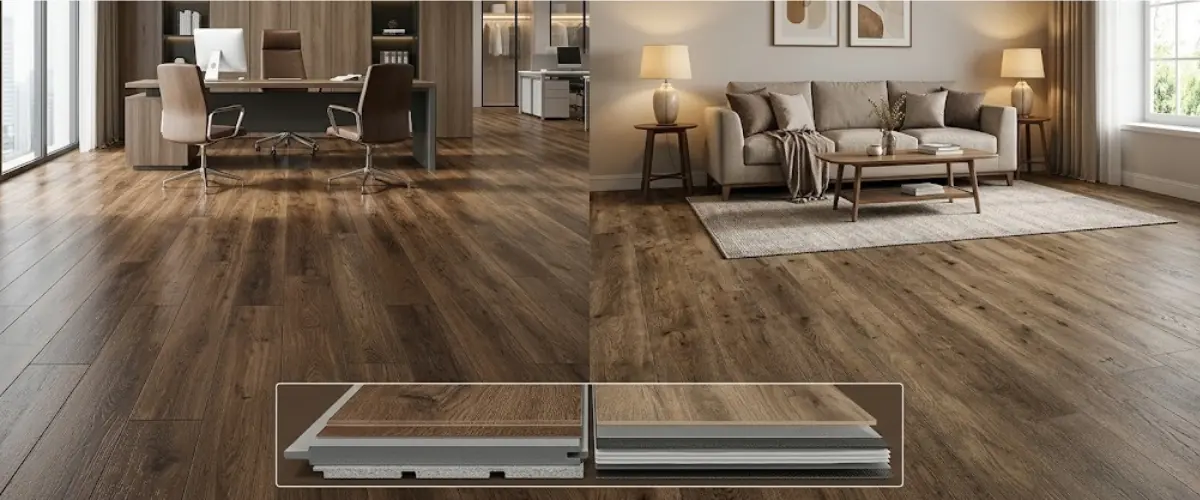
SPC flooring vs vinyl flooring is one of the most common comparisons made by homeowners and commercial specifiers make when sourcing new floor coverings. While both materials replicate the appearance of natural wood and stone, their core construction dictates real-world performance and longevity.
On first inspection, SPC flooring and standard vinyl flooring look virtually identical. The critical distinction lies within their layers: SPC features a rigid stone composite core, whereas conventional vinyl relies on a softer flexible base. This fundamental difference shapes durability, dimensional stability, walking comfort and long-term wear behaviour.
SPC flooring (Stone Plastic Composite) falls under the rigid-core vinyl family, manufactured using limestone powder, PVC resin and stabilisers. Unlike flexible vinyl alternatives, its dense composite backbone delivers superior structural support and improved resistance to everyday abrasion.
What Is SPC Flooring?
SPC flooring (Stone Plastic Composite flooring) is a rigid-core vinyl floor manufactured from a blend of limestone powder, PVC resin and stabilisers.
The defining characteristic of SPC is its stiff stone composite core, delivering greater dimensional stability and impact resistance compared to traditional flexible vinyl varieties.
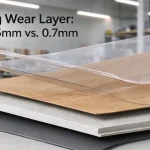
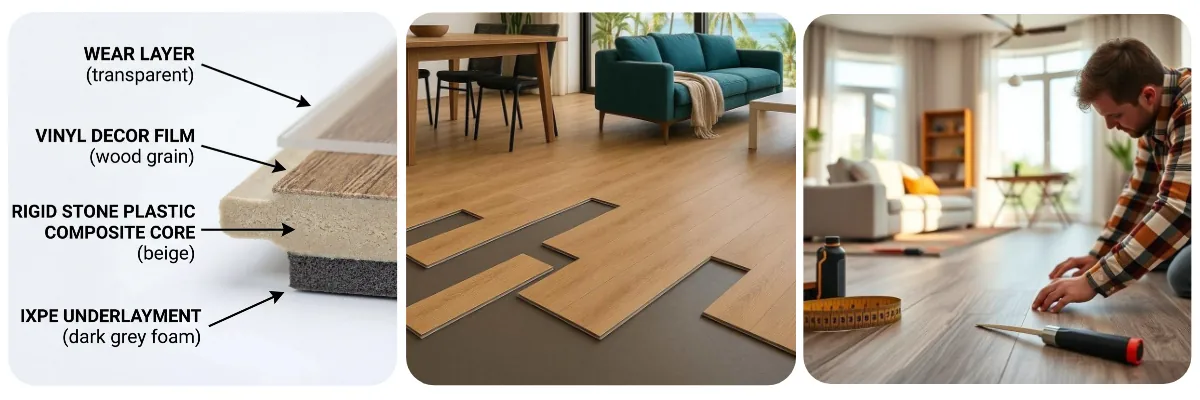
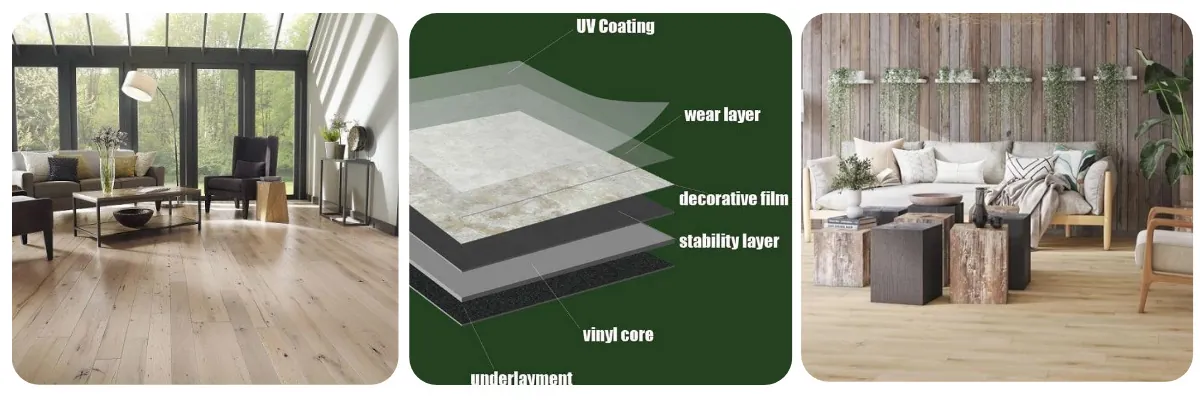
A typical SPC flooring structure consists of four layers:
1. Wear Layer
A transparent protective top layer that shields the surface against scratches, stains and everyday wear caused by foot traffic.
2. Decorative Layer
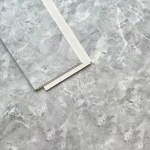
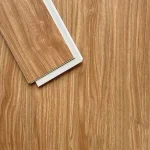
High-definition printed foil reproducing realistic timber, stone or tile visuals.
3. SPC Core Layer
The stone plastic composite core is the main feature that separates SPC from regular vinyl flooring. It delivers outstanding rigidity and dimensional stability.
4. Attached Underlay
Most SPC planks come pre-fitted with an IXPE or EVA backing to reduce footfall noise and boost walking comfort.
Key Benefits of SPC Flooring:
- Fully waterproof
- Highly durable and resistant to knocks and impacts
- Excellent dimensional stability across temperature shifts
- Ideal for high-footfall zones
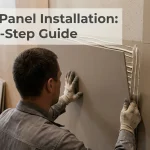
- Simple click-lock floating installation
- Reduced expansion and contraction caused by temperature changes
Thanks to these properties, SPC flooring is widely specified for:
- Private homes
- Office premises
- Hotels and hospitality spaces
- Retail outlets
- Schools and educational buildings
- General commercial developments
What Is Vinyl Flooring?
Vinyl flooring is a popular synthetic floor material primarily produced from PVC (polyvinyl chloride). It has remained popular for decades due to its affordability, water resistance, easy maintenance and wide range of design options.
Modern vinyl flooring is available in multiple formats:
- Sheet vinyl
- Vinyl composition tiles (VCT)
- Luxury vinyl tiles (LVT)
- Luxury vinyl planks (LVP)
Of these ranges, LVT and LVP act as the closest alternatives to SPC flooring. They are engineered to mimic natural wood and stone surfaces while offering better wear resistance than older-generation vinyl products.
In contrast to SPC flooring, standard vinyl uses a flexible PVC core. This softer construction creates a cushioned underfoot sensation and offers improved noise absorption during everyday use.
Main Advantages of Choosing Vinyl Flooring
- Lower upfront material cost
- Softer, more comfortable walking experience
- Huge selection of colours, patterns and surface textures
- Easy to install and maintain
- Well suited to most domestic settings
That said, the flexible core structure means standard vinyl can suffer from reduced dimensional stability when exposed to large temperature swings or sustained heavy point loads.
SPC Flooring vs Vinyl Flooring: Core Construction Comparison
The most significant divide between SPC flooring and vinyl flooring can be found in their core layer.
| Feature | SPC Flooring | Vinyl Flooring |
|---|---|---|
| Core Composition | Limestone powder + PVC + stabilisers | PVC foam or flexible vinyl substrate |
| Core Type | Rigid core | Flexible core |
| Typical Thickness | 4mm–8mm | 2mm–6mm |
| Dimensional Stability | Very good | Moderate |
| Impact Resistance | Superior | Good |
| Underfoot Feel | Firm, solid | Soft, cushioned |
SPC’s rigid stone composite core delivers greater strength and stability. Vinyl’s pliable PVC base offers extra flexibility and walking comfort.
Durability: SPC Flooring vs Vinyl Flooring
Durability plays an important role when selecting a flooring product.
Durability of SPC Flooring
In busy environments such as retail units, offices and hotels, flooring faces constant foot traffic, moving furniture and ongoing abrasion. This makes SPC a frequent choice for projects requiring robust, long-lasting surfaces under heavy use.
The rigid core delivers:
- Enhanced resistance to impacts
- Higher load-bearing capability
- Improved scratch resistance
- Lower risk of denting from heavy furniture
It performs reliably in high-traffic locations including:
- Shopping centres
- Cafés and restaurants
- Office buildings
- Hotel common areas and bedrooms
Durability of Vinyl Flooring
Vinyl flooring is also durable, particularly luxury vinyl (LVT / LVP).
Nevertheless, its softer core makes it more vulnerable to:
- Persistent pressure from heavy furniture
- Damage from sharp objects
- Movement caused by extreme temperature fluctuations
For commercial premises or heavily used areas, SPC flooring generally delivers more consistent long-term performance.
Water Resistance: SPC Flooring vs Vinyl Flooring
Both SPC and vinyl flooring offer excellent water resistance, but their performance differs because of their core structures.
Water Resistance of SPC Flooring
SPC features a fully waterproof stone composite core.
Key advantages:
- Robust resistance to water spillages and moisture exposure
- No swelling under typical humid conditions
- Suitable for kitchens and bathrooms
- Consistent performance in damp environments
Water Resistance of Vinyl Flooring
Vinyl flooring also boasts strong water resistance, as PVC does not absorb moisture.
However, many flexible vinyl products exhibit:
- Weaker dimensional stability
- Increased risk of thermal expansion
- Greater sensitivity to temperature changes
While both materials repel water, SPC maintains better structural stability when exposed to combined moisture and temperature variation.
Cost Comparison: SPC Flooring vs Vinyl Flooring
Budget is often a key deciding factor when comparing these two floor types. Standard vinyl flooring is usually more affordable, thanks to its flexible PVC construction requiring fewer raw materials and simpler production processes.
SPC flooring normally demands a higher initial investment due to its dense rigid stone composite core and enhanced structural properties. Even so, for high-traffic locations, the extra upfront cost can reduce ongoing maintenance and the need for premature replacement over time.
Vinyl flooring works well for bedrooms, rental properties or projects where tight budget control is essential. In contrast, offices, hotels, retail spaces and high-traffic residential areas often favour SPC for its reliable dimensional stability and extended service life.
SPC Flooring vs Vinyl Flooring: Which Option Should You Select?
The correct flooring choice depends on your budget, installation location and performance priorities. SPC and vinyl each carry distinct strengths, engineered for different use cases.
Choose SPC Flooring for Maximum Stability and Long-Term Durability
Opt for SPC when stability and wear resistance are top priorities. Its rigid stone composite core copes excellently with impacts, moisture and temperature changes, suiting regularly used and high-footfall spaces.
SPC is commonly specified for:
- Hotels and hospitality developments
- Office and commercial interiors
- Retail premises
- Apartments and busy residential zones
Choose Vinyl Flooring for Comfort and Cost-Effective Projects
Vinyl flooring is a practical solution when affordability and a softer walking sensation take precedence. Its flexible structure creates a cushioned feel underfoot alongside an extensive choice of decorative finishes.
Vinyl flooring fits well within:
- Bedrooms and living areas
- Domestic renovation schemes
- Temporary flooring installations
- Light commercial applications
SPC Flooring vs Vinyl Flooring: Quick Comparison Overview
| Category | Stronger Performer |
|---|---|
| Durability | SPC Flooring |
| Water Resistance | SPC Flooring |
| Dimensional Stability | SPC Flooring |
| Underfoot Comfort | Vinyl Flooring |
| Design Variety | Equal |
| Upfront Price | Vinyl Flooring |
| Heavy Commercial Use | SPC Flooring |
| Budget Domestic Projects | Vinyl Flooring |
Conclusion
For most high-traffic commercial and busy residential projects, SPC flooring is often a sensible investment. Its rigid core delivers superior stability, impact resistance and long-term durability. Vinyl flooring remains an attractive option for domestic interiors where lower costs and a softer walking feel are the main requirements.
Your final selection should align with the room environment, available budget and expected performance standards. If you require guidance to pick the optimal flooring solution for your project, contact our team for professional advice and a competitive quotation.