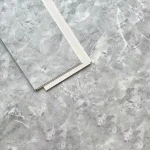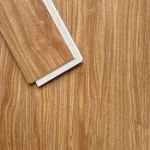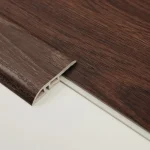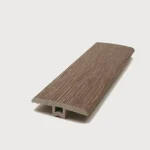
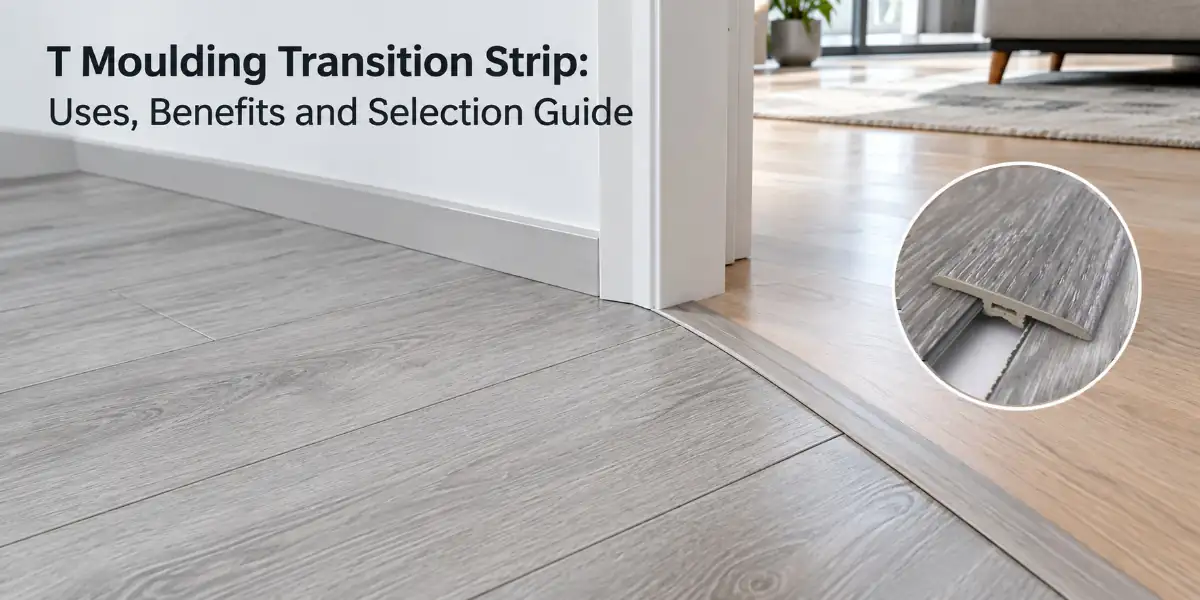
A t moulding transition strip provides a clean and practical way to connect two flooring surfaces that are at the same or similar height. For SPC flooring projects, an SPC T-moulding can cover the joint between flooring sections while creating a neat transition. Its T-shaped profile is designed to sit over the joint, helping protect exposed flooring edges and giving the installation a finished appearance.
For flooring manufacturers, distributors, contractors and project buyers, choosing the right transition profile requires more than matching the color. Material, dimensions, flooring thickness, installation method and application should all be considered.
What Is a T Moulding Transition Strip?
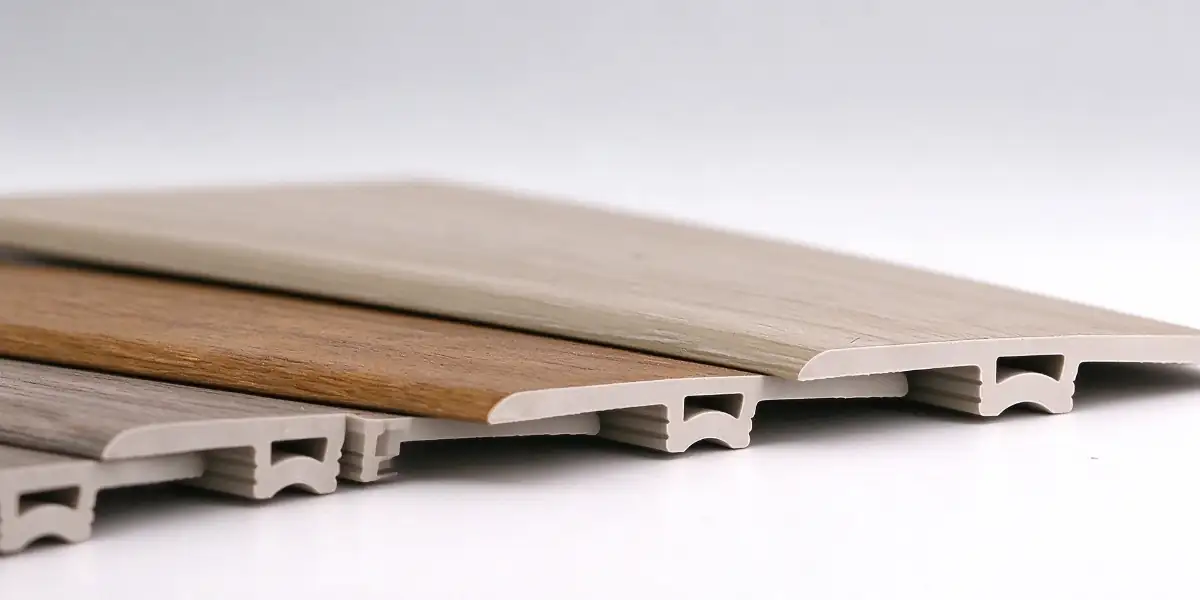
A T moulding transition strip is a flooring accessory with a T-shaped profile. The upper part covers the joint between two flooring surfaces, while the lower section fits into the gap between them.
Unlike a reducer, which is designed to connect floors at different heights, T-moulding is generally used when the adjoining surfaces are at the same or nearly the same level.
For SPC flooring applications, an SPC T-moulding provides a coordinated transition between flooring sections. It can be used in residential, commercial and other interior projects where a clean connection between floor areas is required.
Why Use SPC T-Moulding?
SPC, or Stone Plastic Composite, is widely used for rigid-core flooring because of its dimensional stability, water resistance and durable construction. Using a compatible SPC transition profile can help create a more consistent flooring system.
An SPC T-moulding can provide several practical benefits:
- Clean appearance: It covers the joint between two flooring areas and creates a finished edge.
- Edge protection: The profile helps protect exposed flooring edges around transition points.
- Material coordination: SPC material can provide a closer match with SPC flooring in terms of appearance and application.
- Easy project planning: Standardized profiles make it easier for flooring suppliers and installers to specify transition accessories.
- Versatile applications: T-moulding can be used in doorways, room transitions and larger flooring installations.
The exact performance depends on the profile design, dimensions, installation method and quality of the product.
Where Is T-Moulding Used?
The most common application is between two flooring surfaces with similar heights. For example, an SPC floor may continue from one room into another, creating a joint that needs to be covered.
Typical applications include:
Doorways
Doorways are common transition points between rooms. A T-moulding can cover the joint while providing a visually defined boundary between flooring sections.
Between Adjacent Rooms
When the same or similar SPC flooring is installed in different rooms, a transition profile can provide a neat connection between the two areas.
Large Flooring Areas
Large installations may require planned transition points between flooring sections. T-moulding can help create a finished connection without leaving the joint exposed.
Commercial Interiors
Offices, retail spaces, hotels and other commercial interiors can also use transition profiles where different flooring sections meet.
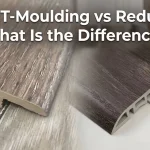
T-Moulding vs Reducer: What Is the Difference?
Selecting the correct transition profile starts with understanding the difference between T-moulding and reducer profiles.
A T-moulding is generally suitable when the two flooring surfaces are at the same or similar height. The profile sits over the joint and creates a symmetrical transition.
A reducer is designed for situations where one flooring surface is higher than the other. Its sloped profile provides a gradual transition between different floor levels.
Therefore, buyers should check the actual floor heights before selecting a profile. Using the wrong transition type can affect both the appearance and installation of the finished floor.
How to Choose an SPC T-Moulding
For B2B flooring projects, several specifications should be reviewed before ordering.
1. Check Flooring Thickness
The profile should be compatible with the thickness and construction of the SPC flooring. Different flooring systems may require different transition profile dimensions.
2. Confirm Dimensions
Check the profile width, height and length against the project requirements. Consistent dimensions are particularly important for bulk flooring installations.
3. Consider the Material
SPC T-moulding is suitable for projects where buyers want a transition accessory based on SPC material. Material selection should match the intended application and performance requirements.
4. Match the Finish
Color and surface finish can affect the overall appearance of the flooring installation. Suppliers may offer finishes designed to coordinate with different SPC flooring collections.
5. Check the Installation Method
Installation systems can vary between products. Depending on the profile design, T-moulding may use adhesive, a snap-fit system or another fixing method. Buyers should confirm the recommended installation method before placing an order.
How to Install a T Moulding Transition Strip
The installation process depends on the specific profile and flooring system, but the general procedure is straightforward.
First, measure the transition area and determine the required profile length. Next, prepare the joint between the flooring sections according to the flooring manufacturer’s installation requirements. Cut the T-moulding to the required length and install it using the specified fixing method.
The profile should sit securely over the joint without interfering with the surrounding flooring. Always follow the installation instructions provided for the specific T-moulding product.
T Moulding for B2B Flooring Projects
For distributors, contractors and flooring brands, transition accessories should be considered as part of the complete flooring system rather than as an afterthought.
When sourcing a t moulding transition strip, buyers should compare material, dimensions, color options, installation method, packaging and supply consistency. For large projects, sample approval and compatibility testing can also help reduce installation issues.
YPRO supplies SPC flooring accessories designed to support complete flooring projects, including T-moulding and other transition and finishing profiles. Buyers can select specifications according to their flooring system and project requirements.
Choose the Right T Moulding Transition Strip
An SPC T-moulding can provide a practical finishing solution where two similar-height flooring surfaces meet. By covering the joint and protecting exposed edges, it helps create a cleaner and more consistent installation.
For B2B buyers, the best profile should be selected according to flooring thickness, dimensions, material, finish and installation requirements. Choosing the right transition accessory at the specification stage can help create a more professional flooring system from installation through to the finished project.
If you are sourcing an SPC t moulding transition strip for residential or commercial flooring projects, contact YPRO to discuss product specifications, finishes, installation methods and bulk supply requirements. Our team can help you select a suitable T-moulding solution based on your flooring system and project needs.