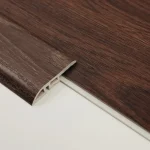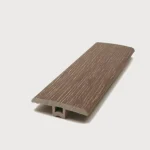

What Is SPC Flooring is a common question among homeowners, contractors, and flooring distributors as this material continues to grow in popularity worldwide. Known for its waterproof structure, rigid core, durability, and easy installation, this flooring solution is widely used in residential and commercial spaces.
Whether you’re a homeowner planning a renovation, a contractor managing a commercial project, or a flooring distributor sourcing products, understanding what SPC flooring is can help you make informed purchasing decisions.
In this complete guide, you’ll learn everything about SPC flooring, including its structure, manufacturing process, advantages, disadvantages, applications, installation methods, maintenance tips, and how it compares with other popular flooring options.
What Is SPC Flooring?
SPC flooring stands for Stone Plastic Composite Flooring (also known as Stone Polymer Composite Flooring). It is a type of rigid core luxury vinyl flooring engineered with a dense core made from limestone powder, PVC resin, and stabilizers.
Unlike traditional vinyl flooring, SPC flooring has a rigid core that offers greater dimensional stability, making it resistant to expansion and contraction caused by temperature and humidity changes.
Thanks to its excellent waterproof performance and high wear resistance, SPC flooring is commonly used in both residential and commercial environments.
Main Components
- Limestone powder
- PVC resin
- Stabilizers
- Decorative film
- Wear layer
- UV coating
- Click-lock system
- Optional IXPE underlayment
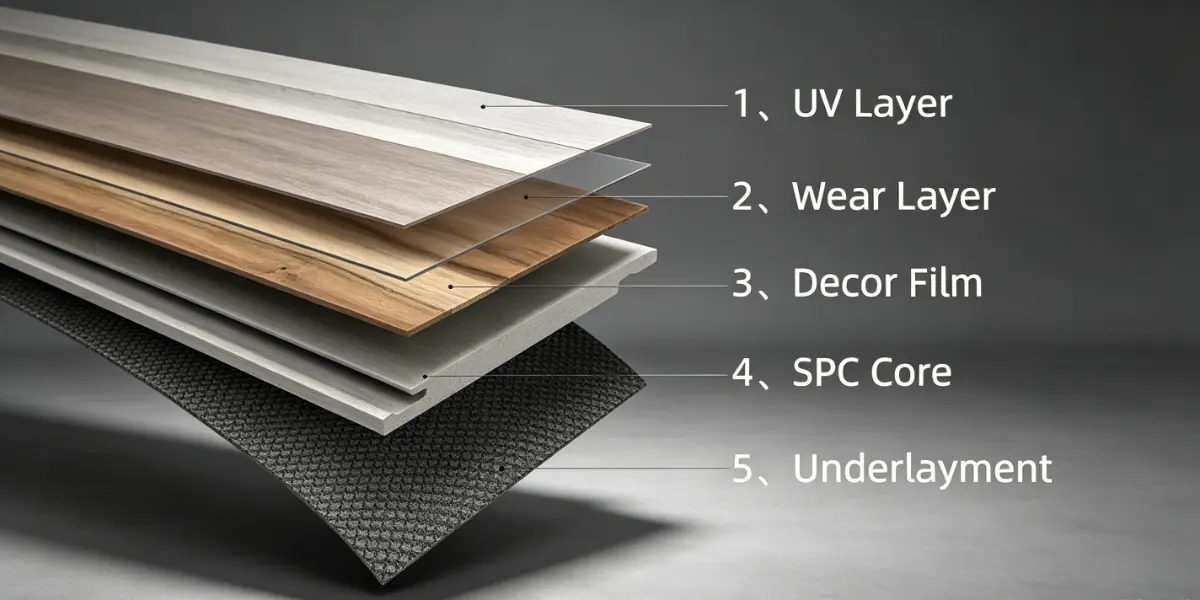
SPC Flooring Structure
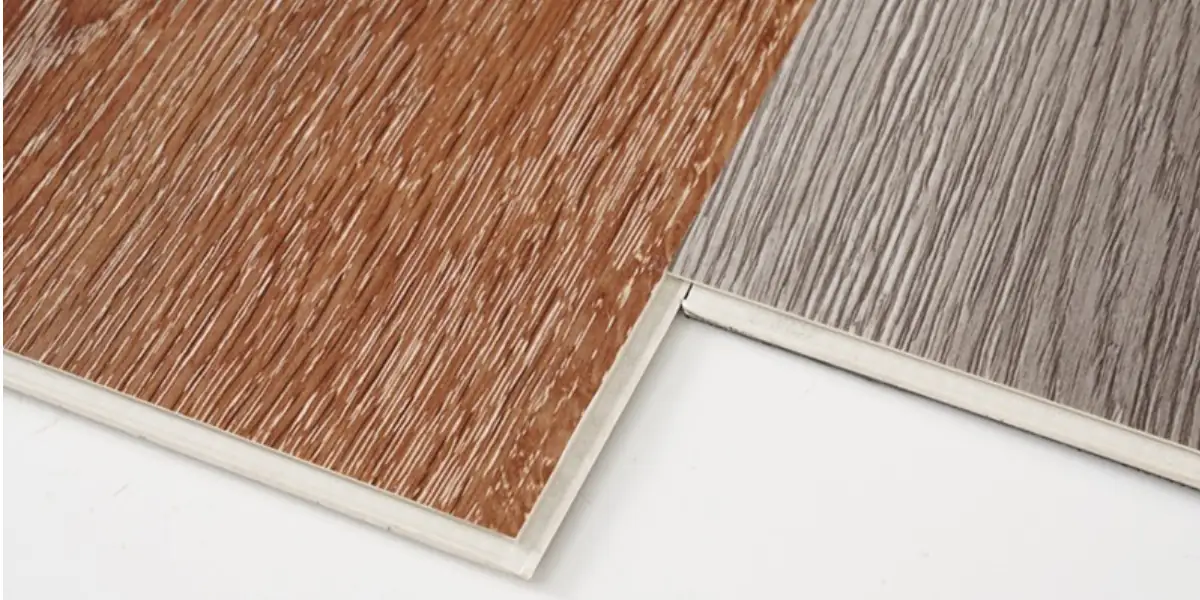
A standard SPC flooring plank typically consists of five layers.
UV Coating
Protects the floor against stains, scratches, and fading while making daily cleaning easier.
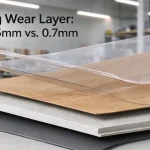
Wear Layer
The transparent wear layer protects the decorative surface.
Common thicknesses include:
- 0.3 mm
- 0.5 mm
- 0.7 mm
Commercial projects generally require thicker wear layers for improved durability.
Decorative Film
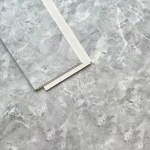
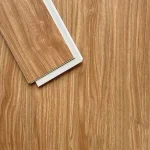
Provides realistic wood, stone, marble, or tile designs using high-resolution printing technology.
SPC Core
The rigid core combines limestone powder and PVC resin to deliver superior stability and impact resistance.
IXPE or EVA Underlayment
Many SPC flooring products include an attached underlayment that improves sound insulation, walking comfort, and moisture protection.
How Is SPC Flooring Made?
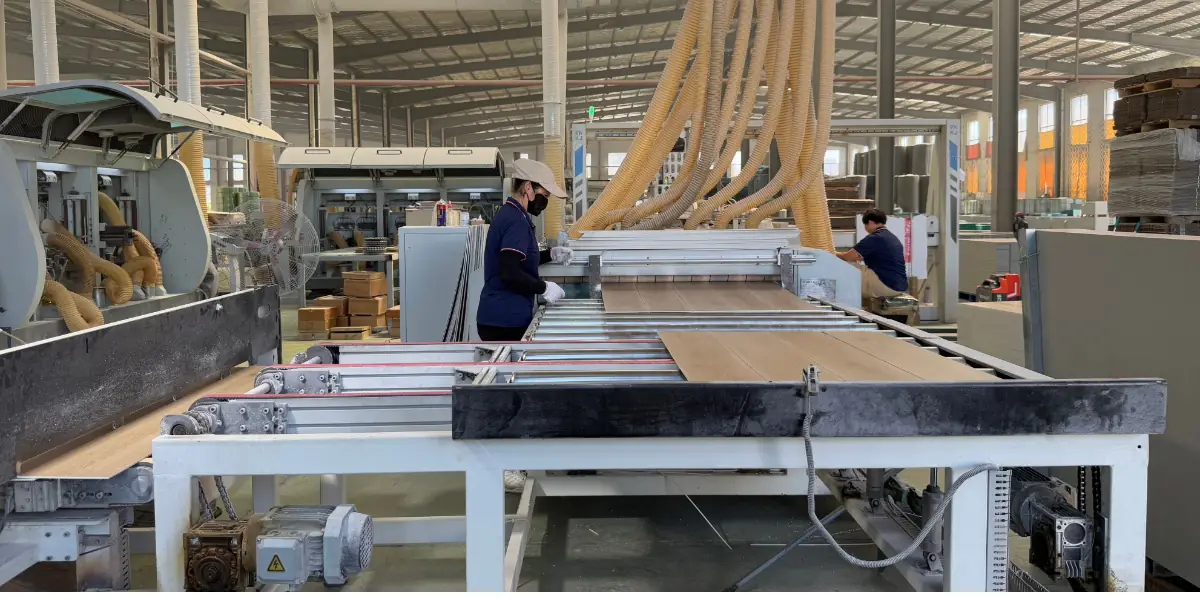
Modern SPC flooring is manufactured through a highly automated production process to ensure consistent quality.
Step 1 – Raw Material Mixing
Limestone powder, PVC resin, and stabilizers are blended according to precise formulations.
Step 2 – Extrusion
The mixed materials are heated and extruded into rigid SPC core boards.
Step 3 – Lamination
Decorative film and wear layer are laminated onto the core.
Step 4 – UV Coating
Multiple UV coating layers improve scratch resistance and stain protection.
Step 5 – Click Lock Milling
Precision machinery mills the click-lock edges for fast and secure installation.
Step 6 – Quality Inspection
Each plank undergoes quality testing for size accuracy, wear resistance, waterproof performance, and locking strength.
Step 7 – Packaging
Finished products are packed and prepared for global shipment.
Benefits of SPC Flooring
SPC flooring has become increasingly popular because of its outstanding performance.
100% Waterproof
Ideal for kitchens, bathrooms, laundry rooms, and basements.
Excellent Durability
The rigid core resists dents, impacts, and heavy foot traffic.
Scratch Resistant
Suitable for homes with children and pets.
Fire Resistant
Many SPC flooring products meet international fire safety standards.
Easy Installation
The click-lock system allows quick floating installation without glue.
Low Maintenance
Routine sweeping and damp mopping are usually sufficient.
Eco-Friendly
Many products are manufactured with low VOC emissions and comply with environmental standards.
Stable Under Temperature Changes
Unlike traditional wood flooring, SPC flooring expands and contracts very little.
Disadvantages of SPC Flooring
While SPC flooring offers many advantages, it also has some limitations.
- Harder underfoot than WPC flooring
- Requires a flat and level subfloor
- Cannot usually be refinished like hardwood flooring
- Premium products may have a higher initial cost
Where Can SPC Flooring Be Used?
SPC flooring is suitable for a wide variety of environments.
Residential
- Living rooms
- Bedrooms
- Kitchens
- Bathrooms
- Laundry rooms
- Basements
Commercial
- Offices
- Hotels
- Restaurants
- Retail stores
- Schools
- Hospitals
- Shopping malls
SPC Flooring vs Other Flooring Types
| Feature | SPC Flooring | Laminate | LVP | Ceramic Tile |
|---|---|---|---|---|
| Waterproof | ✔ | Limited | ✔ | ✔ |
| Durability | Excellent | Good | Excellent | Excellent |
| Installation | Easy | Easy | Easy | Difficult |
| Maintenance | Low | Low | Low | Low |
| Comfort | Medium | Medium | Soft | Hard |
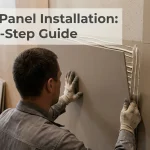
How to Install SPC Flooring
Basic installation steps include:
- Prepare the subfloor.
- Test moisture levels if necessary.
- Install underlayment (if not pre-attached).
- Leave expansion gaps around walls.
- Click the planks together.
- Trim the last row for a perfect fit.
- Install skirting boards and transition moldings.
How to Maintain SPC Flooring
Maintaining SPC flooring is simple.
- Sweep or vacuum regularly.
- Mop with a damp microfiber mop.
- Avoid abrasive cleaners.
- Use furniture pads to prevent scratches.
- Clean spills promptly.
- Follow the manufacturer’s maintenance guidelines.
How to Choose SPC Flooring
Before purchasing SPC flooring, consider the following factors:
- Overall thickness
- Wear layer thickness
- Surface texture
- Click-lock quality
- Attached underlayment
- Fire rating
- Environmental certifications
- Warranty
- Manufacturer reputation
Conclusion
SPC flooring is an ideal solution for homeowners, builders, and commercial buyers seeking a durable, waterproof, and low-maintenance flooring option. Its rigid core construction, realistic designs, and easy click-lock installation make it suitable for a wide range of residential and commercial applications.
Whether you’re renovating a home or sourcing flooring for large-scale projects, choosing high-quality SPC flooring from a reliable manufacturer will help ensure long-lasting performance and excellent value.
For product details, pricing, and wholesale inquiries, please contact us to get a professional quotation and support.