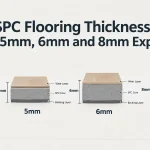
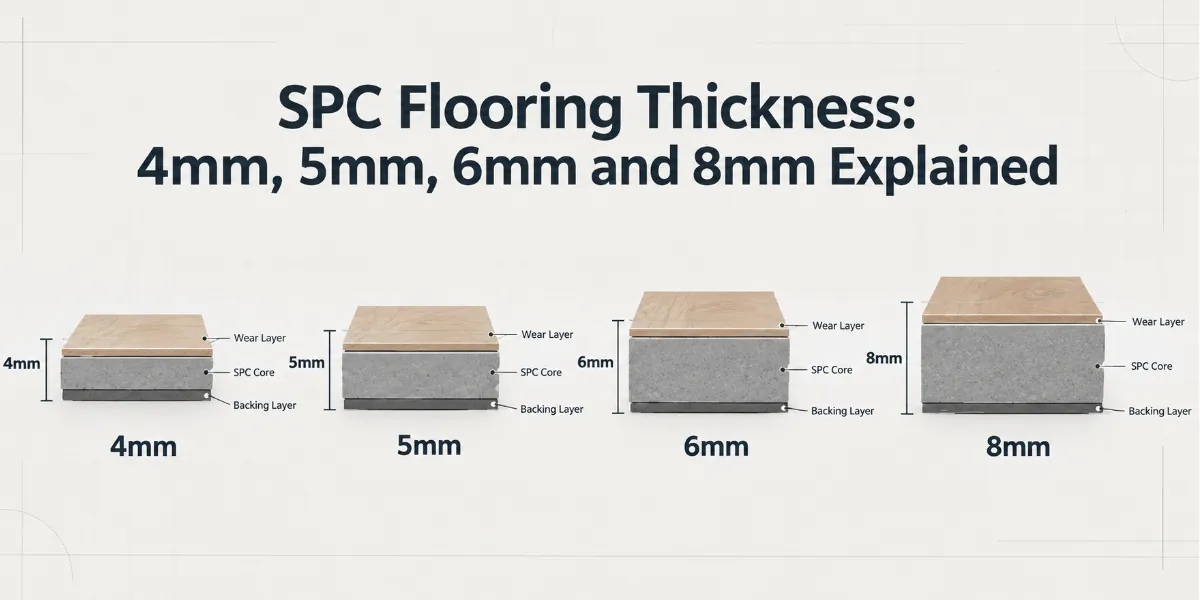
Choosing the right SPC flooring thickness is an important step when sourcing flooring for residential or commercial projects. YPRO SPC flooring is available in 4mm, 5mm, 6mm, and 8mm options, with wear layers from 0.2mm to 1.0mm.
However, overall thickness is only one part of the specification. The wear layer, SPC core, underlayment, subfloor condition, and intended application also affect the final flooring specification. Understanding these factors helps importers, distributors, contractors, and project buyers select suitable products.
What Does SPC Flooring Thickness Mean?
SPC flooring thickness refers to the total thickness of the finished plank. Depending on the product structure, this can include the surface layers, rigid SPC core, and attached backing or underlayment.
A typical SPC plank includes a UV coating, wear layer, decorative film, and SPC core. Some products also include an attached underlayment. Each layer has a different function. For a broader introduction to the material, see our guide to What Is SPC Flooring.
The SPC core provides rigidity and dimensional stability. The wear layer protects the decorative surface from everyday abrasion. An attached underlayment can improve underfoot comfort and sound performance. Therefore, two floors with the same total thickness can still have different specifications.
4mm SPC Flooring
4mm SPC flooring is a relatively slim option. It can be useful when floor height, renovation requirements, or transition details are important. The rigid SPC core still provides the stable structure associated with SPC flooring.
4mm products can be considered for apartments, bedrooms, living areas, and other residential projects. They may also suit renovation applications where maintaining a lower floor profile is important.
When choosing 4mm SPC, buyers should still check the wear layer, core construction, click-lock system, and installation requirements. Overall thickness should not be the only selection factor.
5mm SPC Flooring
5mm SPC flooring offers a balanced specification for many flooring projects. It provides a practical combination of overall thickness, rigid-core construction, and installation flexibility.
For residential applications, 5mm flooring can be considered for living rooms, bedrooms, kitchens, apartments, and similar interior spaces. It can also be suitable for light commercial environments when the complete product specification meets the project requirements.
6mm SPC Flooring
6mm SPC flooring provides a thicker overall plank profile. It can be considered when buyers prefer a more substantial floor construction or when the project specification calls for additional thickness.
6mm products may be used in residential projects as well as offices, retail spaces, hotels, and other commercial interiors. However, commercial buyers should not select a product based on thickness alone.
The wear layer, core density, click-lock quality, surface treatment, and applicable performance requirements should also be reviewed before placing an order.
8mm SPC Flooring
8mm SPC flooring is the thickest option in YPRO’s current standard range. A thicker plank provides a more substantial overall profile and may suit projects that specify a heavier flooring construction.
8mm SPC can be considered for larger residential spaces, hospitality projects, offices, retail environments, and other applications where the specification supports a thicker floor. As with other SPC products, the complete flooring structure should be evaluated rather than thickness alone.
SPC Wear Layer: Why Does It Matter?
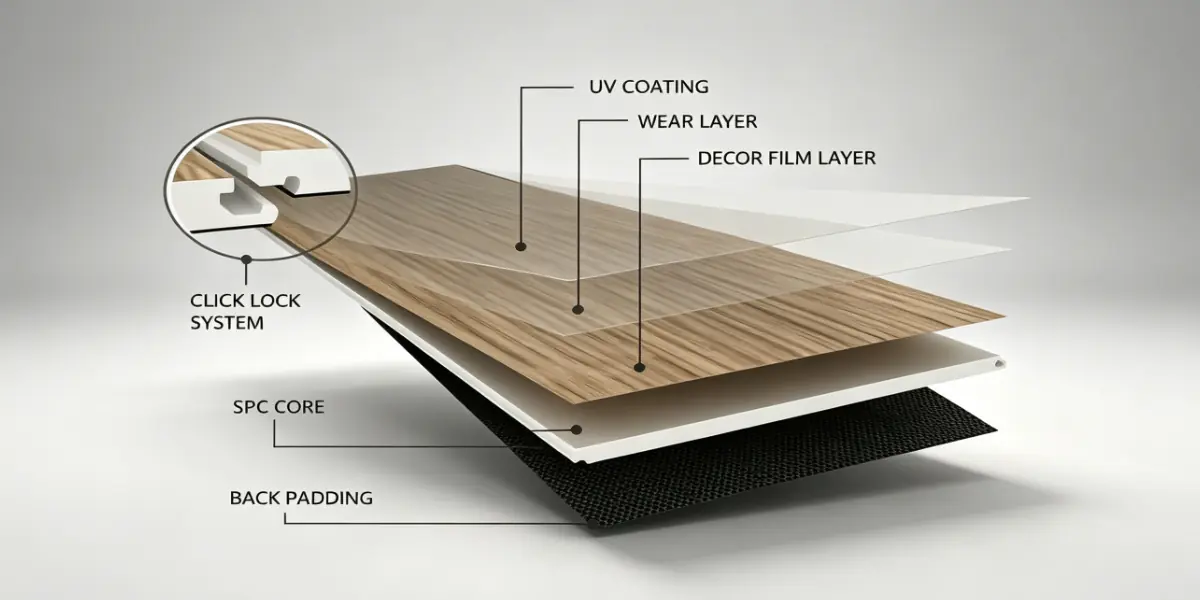
The SPC wear layer is the transparent protective layer above the decorative film. It helps protect the surface against everyday abrasion and foot traffic.
YPRO offers wear layer options from 0.2mm to 1.0mm, including 0.3mm, 0.5mm, and 0.7mm options. The appropriate wear layer depends on expected traffic, application, and project requirements.
A residential floor with normal household traffic may require a different specification from a busy retail store or commercial building. Buyers should therefore evaluate wear layer thickness separately from total plank thickness. Our SPC Flooring Buying Guide also covers key factors importers and distributors should review when comparing products.
Does SPC Flooring Need Underlayment?
SPC flooring underlayment is another specification to check before installation. Some SPC products have an attached underlayment, while others may use a separate approved underlayment.
Underlayment can improve underfoot comfort, reduce sound transmission, and help accommodate minor subfloor imperfections. However, additional underlayment should not be added when the flooring already has an attached backing unless the manufacturer’s installation instructions allow it.
For a broader overview of related flooring components, see our guide to SPC Flooring Accessories.
Which SPC Thickness Is Right for Residential Applications?
For residential applications, 4mm, 5mm, 6mm, and 8mm SPC flooring can all be considered. The right specification depends on room use, existing floor height, expected traffic, acoustic requirements, and installation conditions.
Bedrooms and living areas may have different requirements from kitchens, hallways, or entrance areas. Buyers should therefore compare thickness with wear layer, core construction, and underlayment.
It can also be useful to review the pros and cons of SPC flooring when evaluating different flooring specifications for residential projects.
Which Thickness Is Suitable for Commercial Applications?
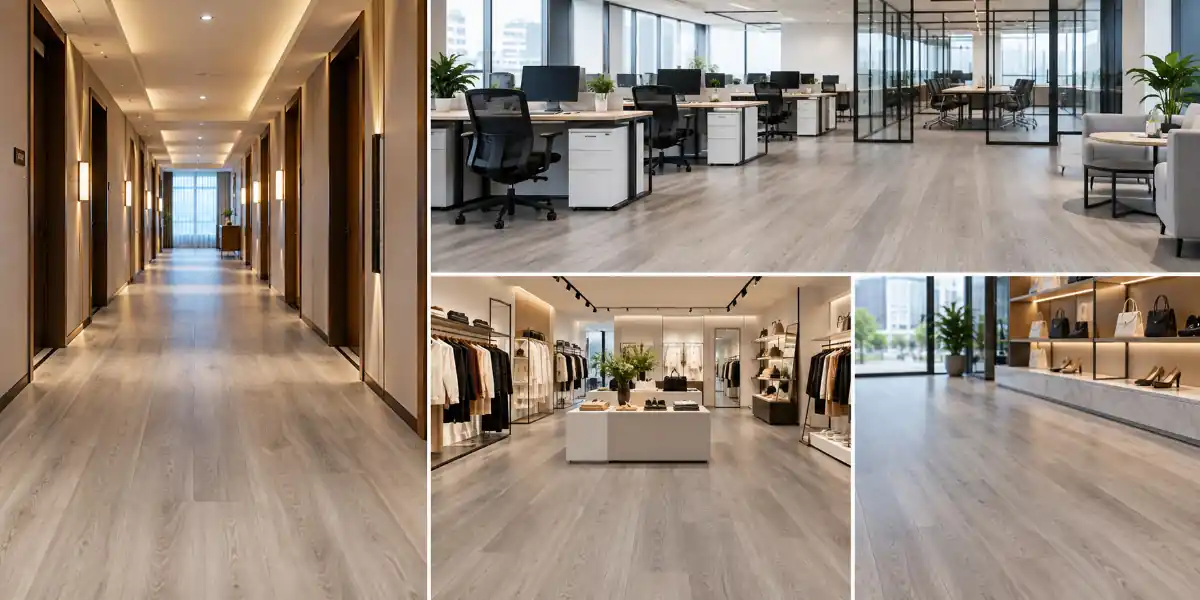
Commercial applications usually require closer attention to traffic levels and surface durability. Offices, hotels, retail stores, restaurants, and other commercial interiors may experience more frequent foot traffic than residential spaces.
For these projects, buyers should review the overall SPC construction, wear layer, click-lock system, core quality, surface finish, and applicable performance requirements. A thicker plank is not automatically a better commercial product if the other specifications do not match the project.
When sourcing SPC flooring for commercial projects, buyers should also evaluate production capability, quality control, specifications, and supply support. See our guide to choosing an SPC Flooring Supplier for more information.
4mm vs 5mm vs 6mm vs 8mm SPC Flooring
| Thickness | Typical Consideration | Potential Applications |
|---|---|---|
| 4mm | Slim profile and renovation-friendly | Residential, apartments, renovation |
| 5mm | Balanced specification for versatile use | Residential, offices, light commercial |
| 6mm | More substantial plank construction | Residential, retail, hospitality |
| 8mm | Thicker overall profile | Residential and selected commercial projects |
How to Choose the Right SPC Flooring Thickness
When comparing SPC flooring thickness, consider these factors together:
- Overall thickness: 4mm, 5mm, 6mm, or 8mm
- Wear layer: 0.2mm to 1.0mm
- SPC core structure and density
- Attached or separate underlayment
- Subfloor condition and installation method
- Residential or commercial application
- Expected foot traffic
- Local market and project requirements
This approach gives buyers a more complete way to compare SPC flooring products. It also helps avoid selecting a specification based only on plank thickness.
Conclusion
There is no single SPC flooring thickness for every project. 4mm, 5mm, 6mm, and 8mm products can each meet different residential and commercial requirements. The wear layer, SPC core, and underlayment are also important parts of the complete flooring specification.
YPRO offers SPC flooring in 4mm, 5mm, 6mm, and 8mm thicknesses with multiple wear layer options for different project requirements. Contact YPRO to discuss specifications, colors, packaging, and OEM requirements for your market.