Choosing the right SPC Flooring Supplier is an important decision for importers, distributors, wholesalers, and project buyers. Product appearance and quotation are useful starting points, but they do not show the full capability of a supplier. Production consistency, product specifications, quality control, samples, communication, and after-sales support can all affect long-term purchasing results.
Instead of choosing a supplier based only on price, B2B buyers should use a clear evaluation process. This guide explains what to check before starting a long-term SPC flooring supply relationship.
1. Check Whether the Supplier Has Real Production Capability
The first step is to understand who you are actually buying from. A supplier may be a manufacturer, trading company, or a combination of both. Each model can have advantages, but buyers should understand the supply chain before placing a large order.
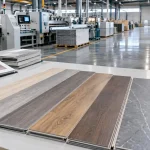
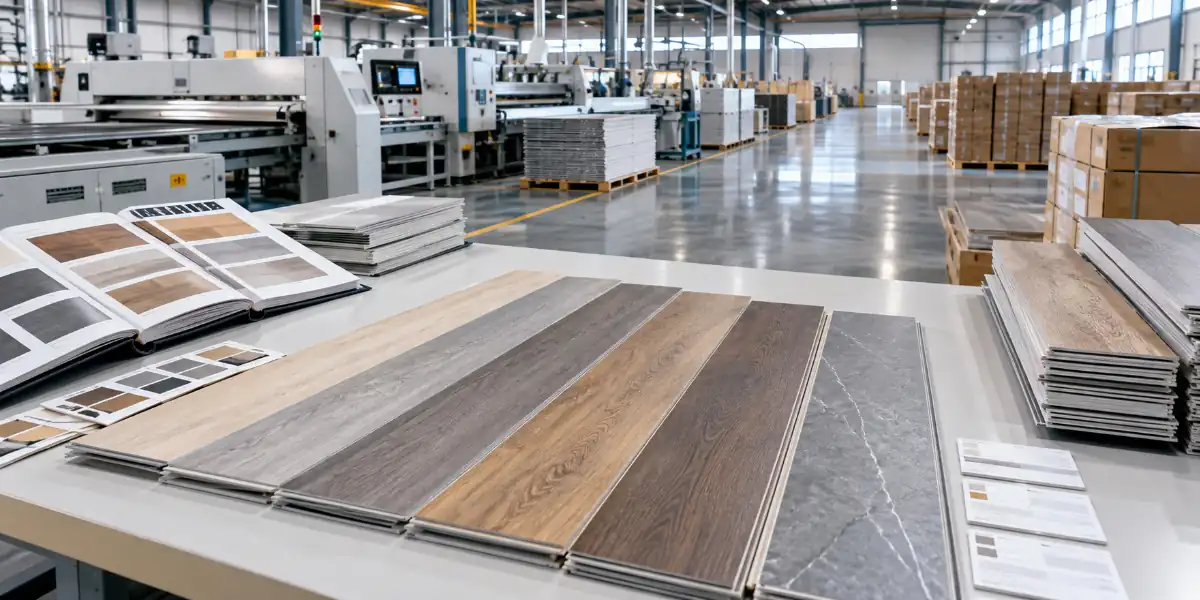
Ask about the factory, production lines, manufacturing experience, quality control process, product range, and export markets. A supplier that can clearly explain its production process is easier to evaluate and communicate with.
For larger purchasing programs, buyers can also request factory information, production photos, product samples, and relevant company documents.
2. Compare Complete SPC Flooring Specifications
Two SPC flooring products can look similar while having different constructions. Therefore, a reliable comparison should use a complete specification sheet rather than a single thickness figure.
Important specifications may include:
- Overall flooring thickness
- Wear layer thickness
- SPC core construction
- Plank or tile dimensions
- Surface finish and embossing
- Click-lock system
- Attached backing or underlayment
- Packaging and carton specifications
Ask each supplier to quote against the same specification. This makes it easier to compare products on a like-for-like basis and reduces misunderstandings during production.
3. Evaluate Quality Control, Not Just the Finished Sample
A good sample is useful, but one attractive sample does not guarantee consistent bulk production. B2B buyers should understand how quality is controlled from raw materials to finished products.
Ask how the supplier checks dimensions, thickness, surface appearance, color consistency, click-lock performance, backing, packaging, and finished quantities.
For repeat orders, it is also useful to keep an approved sample and written product specifications. These references give both sides a clear standard for future production.

4. Request Samples Before Placing a Bulk Order
Physical samples are an important part of supplier evaluation. Product photos can show design, but they cannot fully demonstrate surface texture, edge quality, click performance, or actual construction.
When reviewing samples, compare the product against the requested specification. Check the dimensions, thickness, surface finish, locking system, backing, color, and packaging where applicable.
If several suppliers are being considered, use the same requirements for every sample. A standardized sample review makes supplier comparisons more objective.
5. Review Certifications and Technical Documents
Documentation is another important part of supplier evaluation. Depending on the target market and application, buyers may need product test reports, technical data, certifications, or other compliance documents.
Do not evaluate a supplier only by the logos displayed on its website. Ask for documents that apply to the specific product being purchased and check whether the product description matches the tested specification.
This is particularly important for distributors and project buyers who may need to provide technical information to their own customers.
6. Check MOQ, Lead Time, and Supply Flexibility
A supplier may offer good products but still be unsuitable if its purchasing conditions do not match your business model.
Before ordering, confirm the MOQ, standard production lead time, sample policy, available designs, mixed-color options, packaging requirements, and repeat-order process.
For distributors testing a new product range, flexibility can be more useful than simply selecting the supplier with the lowest quotation. A supplier that can support samples, trial orders, and repeat production can make market development easier.
7. Consider Communication and Long-Term Support
Supplier communication becomes increasingly important as order volume grows. Buyers should evaluate how clearly the supplier answers technical questions, confirms specifications, provides documents, handles sample changes, and communicates production updates.
A reliable supplier should be able to keep product information consistent from quotation to sample approval and bulk production.
For buyers developing their own flooring brand, customized specifications and packaging may also be required. If this applies to your business, you can learn more about private label SPC flooring and OEM/ODM solutions in our dedicated guide.
8. Use a Simple Supplier Evaluation Checklist
Before choosing an SPC flooring supplier, compare the candidates using the same criteria:
| Factor | What to Check |
|---|---|
| Production | Factory capability, equipment, experience, and capacity |
| Product | Complete specifications and available collections |
| Quality | Inspection procedures and production consistency |
| Samples | Sample accuracy and approval process |
| Documents | Technical data, test reports, and certifications |
| MOQ | Minimum order and trial-order flexibility |
| Lead Time | Production schedule and repeat-order reliability |
| Service | Communication, packaging, and export support |
This approach helps buyers look beyond the initial quotation and evaluate the overall value of each supplier.

Choose an SPC Flooring Supplier for Long-Term Value
The right SPC Flooring Supplier should offer more than a competitive quotation. Production capability, consistent specifications, quality control, documentation, sample support, purchasing flexibility, and communication all contribute to a reliable B2B supply relationship.
If your business is sourcing from China for European markets, our guide to SPC Flooring Supplier Europe and direct China sourcing provides more specific information about the sourcing process, shipping, certifications, and supplier selection for Europe.
For importers, distributors, and project buyers, taking time to evaluate suppliers before the first bulk order can reduce sourcing risks and create a stronger foundation for repeat business. Contact YPRO to discuss SPC flooring specifications, samples, wholesale supply, and your project requirements.