SPC flooring underfloor heating compatibility is an important consideration for residential and commercial flooring projects. Buyers need flooring that transfers heat efficiently while maintaining dimensional stability during repeated heating and cooling cycles. Thanks to its rigid stone plastic composite core, SPC flooring offers a practical option for many underfloor heating applications. However, proper temperature control, subfloor preparation, and product compatibility checks are essential for reliable long-term performance.
Can SPC Flooring Be Used with Underfloor Heating?
Yes, SPC flooring can be installed over compatible underfloor heating systems when the product specifications and manufacturer’s installation requirements are followed. Its core is made from limestone powder (calcium carbonate), PVC, and stabilizers, creating a dense and rigid structure.
Compared with traditional wood flooring, SPC planks are generally thinner and contain a high proportion of mineral filler. Calcium carbonate has relatively good thermal conductivity compared with wood, helping heat pass through the flooring structure. This makes SPC a practical flooring option for projects where efficient heat transfer is important.
Another advantage is dimensional stability. Wood flooring can respond significantly to changes in temperature and humidity, while the rigid SPC core is designed to limit dimensional movement. Nevertheless, SPC is not completely unaffected by heat. Excessive or uneven temperatures may still cause expansion, contraction, joint stress, or edge lifting.
For buyers, compatibility should always be confirmed for the specific SPC flooring construction and heating system rather than assumed from the material category alone.
How Does Temperature Affect SPC Flooring?
Underfloor heating creates temperature changes across the subfloor and flooring layers. When the heating system starts, the substrate warms first, followed by the SPC planks. When heating stops, both materials gradually cool down.
When evaluating SPC flooring and underfloor heating compatibility, buyers should consider the flooring’s thermal conductivity, dimensional stability, and the manufacturer’s recommended operating temperature. These factors help determine whether the flooring is suitable for long-term use with a heated floor system.
Different materials respond to these changes at different rates. If the temperature rises too quickly or becomes uneven, dimensional stress may develop around the locking joints and perimeter areas.
SPC flooring helps reduce this risk through its rigid mineral-based core. In a referenced heat-resistance test, the supplied test data showed a dimensional shrinkage rate of less than 0.02% after six hours of heating. This result indicates good dimensional stability under the specific test conditions.
However, laboratory results should not be treated as a guarantee of performance under every heating system. Buyers should request the complete test conditions, including temperature, sample dimensions, and testing method, before using this figure as a product performance specification.
Temperature Control Requirements for SPC Flooring
Temperature management is essential when installing SPC flooring over underfloor heating. Excessive heat can affect the core, locking system, backing layer, and overall floor stability.
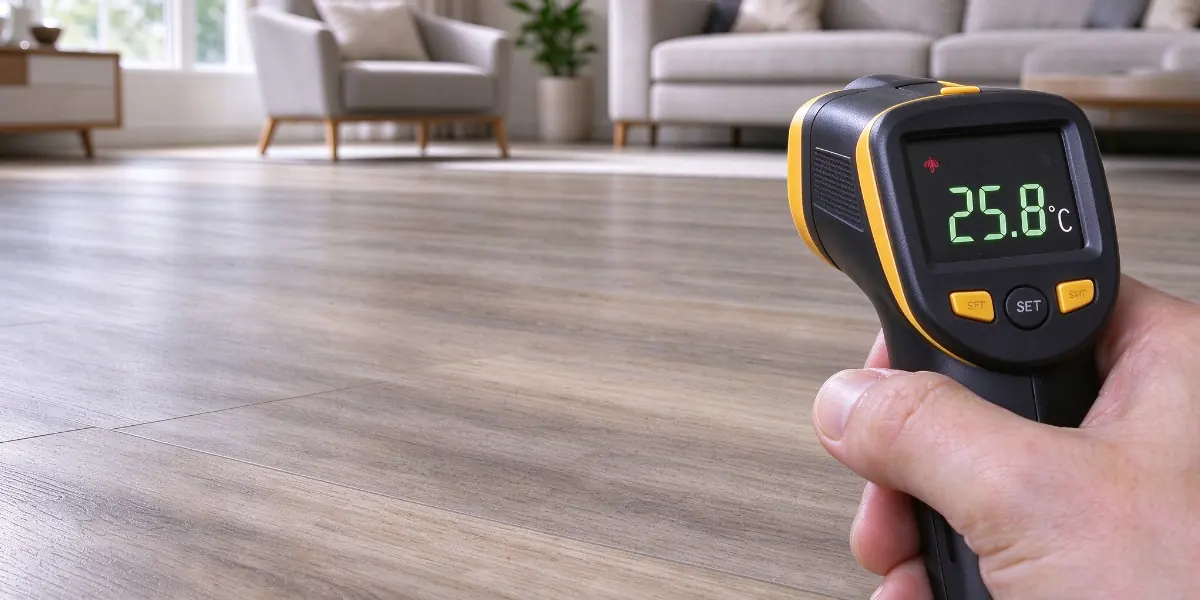
YPRO’s current SPC flooring installation guidance specifies that the subfloor surface temperature must not exceed 30°C throughout the service life of the floor. Buyers should distinguish this limit from room temperature and other heating-system settings.
For projects with underfloor heating, consider the following requirements:
- Monitor the actual subfloor surface temperature rather than relying only on the heating system’s thermostat setting.
- Avoid sudden temperature increases and large fluctuations.
- Distribute heat evenly across the floor.
- Follow the temperature limits specified in the product installation instructions.
- Check whether attached underlayment is approved for use with the selected heating system.
A stable operating temperature helps reduce thermal stress and supports the long-term performance of the flooring.
Installation Preparation Before Using Underfloor Heating
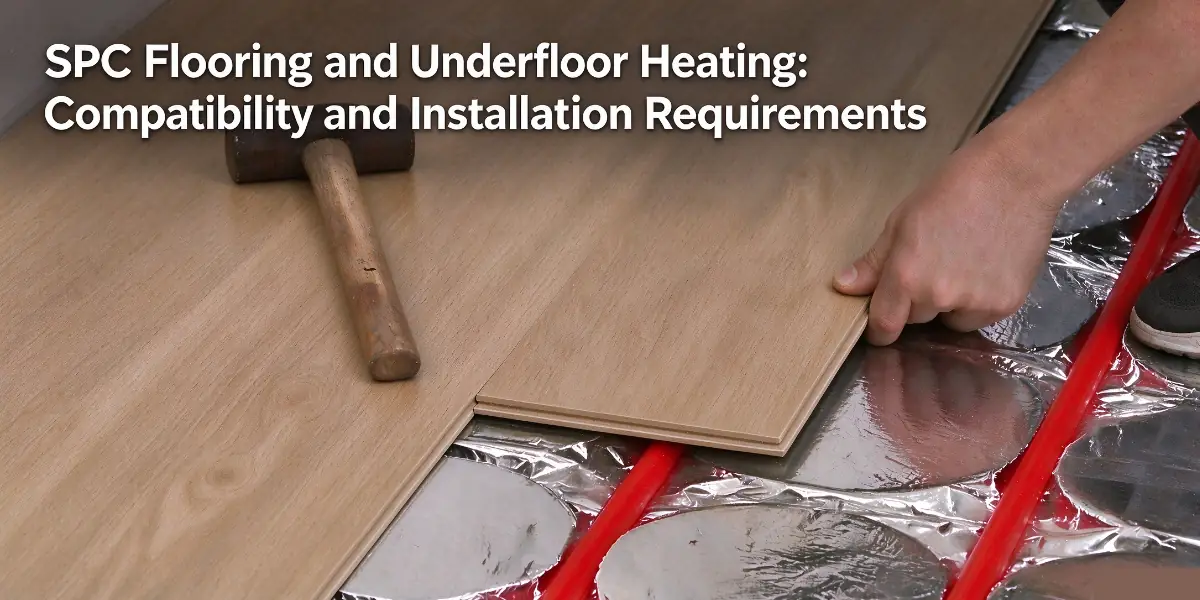
Proper preparation is necessary before installing SPC flooring over a heated subfloor. According to YPRO’s current installation guidance for hydronic radiant heating, the complete heating system should operate for at least one week before installation.
The system should then be switched off 72 hours before installation and remain off for 72 hours after installation is completed. This allows the installation to take place under more stable temperature conditions.
Before laying the flooring, installers should also check that the subfloor is:
- Clean, dry, and structurally sound.
- Smooth and level, without significant bumps or depressions.
- Free from excessive moisture and other substrate problems.
- Compatible with the selected flooring and installation method.
Flooring and adhesive should never come into direct contact with the heating system. The heating pipes or cables must remain properly separated from the flooring by the designed subfloor construction.
Managing Temperature After SPC Flooring Installation
After installation, the heating system should not be restarted immediately. Following YPRO’s current guidance, keep the system switched off for 72 hours after installation.
Once this period has passed, restore heating gradually and return the system to its normal room temperature setting. Avoid sudden increases in heat, especially during the first operating cycle.
During regular use, monitor the floor surface temperature and ensure it remains within the manufacturer’s specified limit. Proper perimeter expansion gaps should also be maintained according to the installation instructions.
These measures help minimize unnecessary thermal stress and reduce the risk of joint separation, edge lifting, and dimensional changes.
How to Check SPC Flooring Compatibility with Underfloor Heating
Not every SPC flooring product has identical thermal performance. Before purchasing, importers, distributors, and project contractors should review several specifications.
Overall thickness: YPRO offers SPC flooring in 4mm, 5mm, 6mm, and 8mm options. Thickness can influence the overall thermal resistance of the flooring assembly.
SPC core construction: The limestone-based rigid core contributes to structural stability and heat transfer characteristics.
Wear layer and backing: Surface layers and attached underlayment form part of the complete flooring structure. Their compatibility with underfloor heating should be confirmed.
Heating system type: YPRO’s current installation guidance specifically addresses hydronic radiant heating. Electric underfloor heating should only be used when the selected product and system are confirmed compatible.
For more information about available specifications, see our guide to SPC Flooring Thickness.
Choose Suitable SPC Flooring for Heated Floors
Selecting suitable SPC flooring for underfloor heating requires more than comparing thickness or appearance. Buyers should evaluate thermal performance, dimensional stability, core construction, underlayment, and installation requirements together.
YPRO offers SPC flooring in multiple thicknesses and wear layer specifications for residential and commercial projects. Before placing an order, buyers can request product specifications, applicable heat-resistance test reports, and installation guidance to confirm suitability for their projects.
Explore our SPC Flooring products or contact YPRO to discuss product compatibility and sourcing requirements.