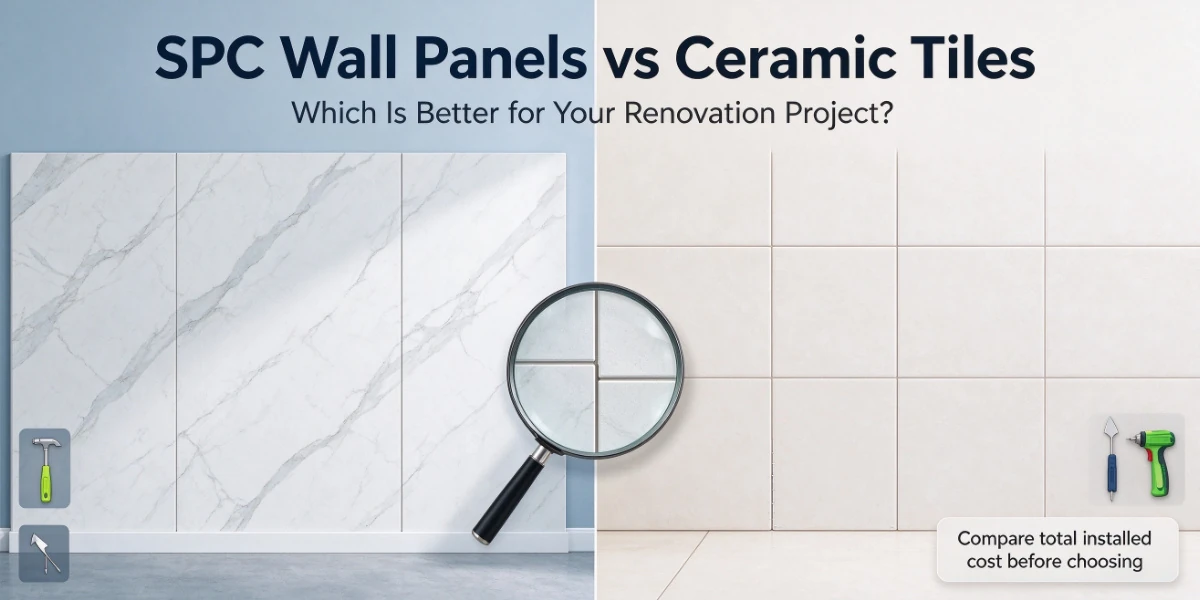
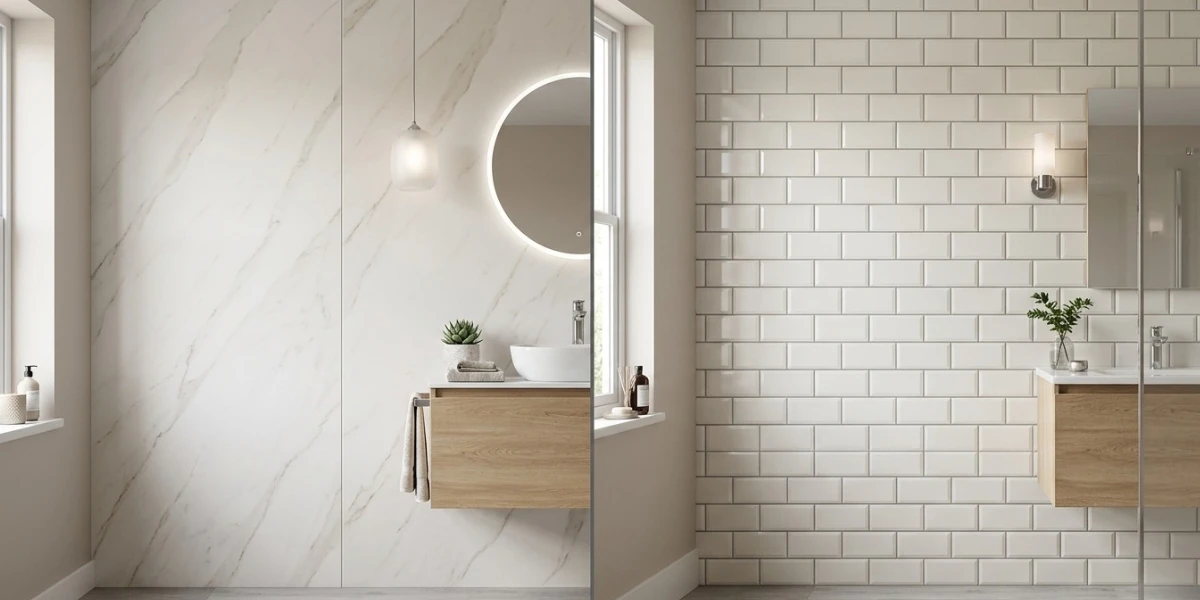
When comparing SPC wall panels vs ceramic tiles, renovation buyers need to consider more than appearance. Installation methods, substrate preparation, joint treatment and maintenance can all affect project costs and timelines. Understanding these differences helps homeowners, contractors and commercial buyers choose a suitable wall finish for their projects.
For homeowners, contractors and commercial project buyers, understanding these differences helps identify the most suitable wall finish for the intended space. This guide compares SPC wall panels vs ceramic tiles from a practical renovation perspective.
What Are SPC Wall Panels and Ceramic Tiles?
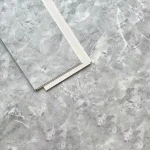
SPC wall panels are decorative wall coverings made with a stone-plastic composite material. They are available in designs that replicate marble, stone and other decorative finishes. Depending on the product and installation system, panels may be attached using adhesive or compatible fixing systems.
Ceramic tiles are hard, fired-clay products commonly installed with tile adhesive or mortar. They are available in various sizes, colors and surface finishes, making them suitable for traditional and contemporary interiors.
Both options can work well in renovation projects. When comparing SPC wall panels vs ceramic tiles, consider the installation requirements, maintenance expectations and intended application before choosing a wall finish.
SPC Wall Panels vs. Ceramic Tiles: Key Differences
| Comparison | SPC Wall Panels | Ceramic Tiles |
|---|---|---|
| Installation | Often involves cutting, positioning and fixing panels | Usually involves adhesive application, tile placement and grouting |
| Joint treatment | Panel joints, corners and edges require appropriate finishing | Tile joints generally require grout, with movement joints where needed |
| Substrate | Requires a suitable, stable and sufficiently flat surface | Requires a sound, properly prepared surface suitable for tile installation |
| Maintenance | Smooth surfaces are generally easy to clean | Tile surfaces are easy to clean, but grout may need additional attention |
| Project timeline | May reduce installation steps in suitable projects | Requires time for installation, grouting and any specified curing periods |
| Design | Large decorative panels can create a more continuous appearance | Tile sizes, patterns and grout lines offer extensive design flexibility |
These are general differences rather than guarantees. Actual performance and installation time depend on product specifications, site conditions and the installation method.
Installation Process and Substrate Preparation
One of the main differences between SPC wall panels and ceramic tiles is the installation process.
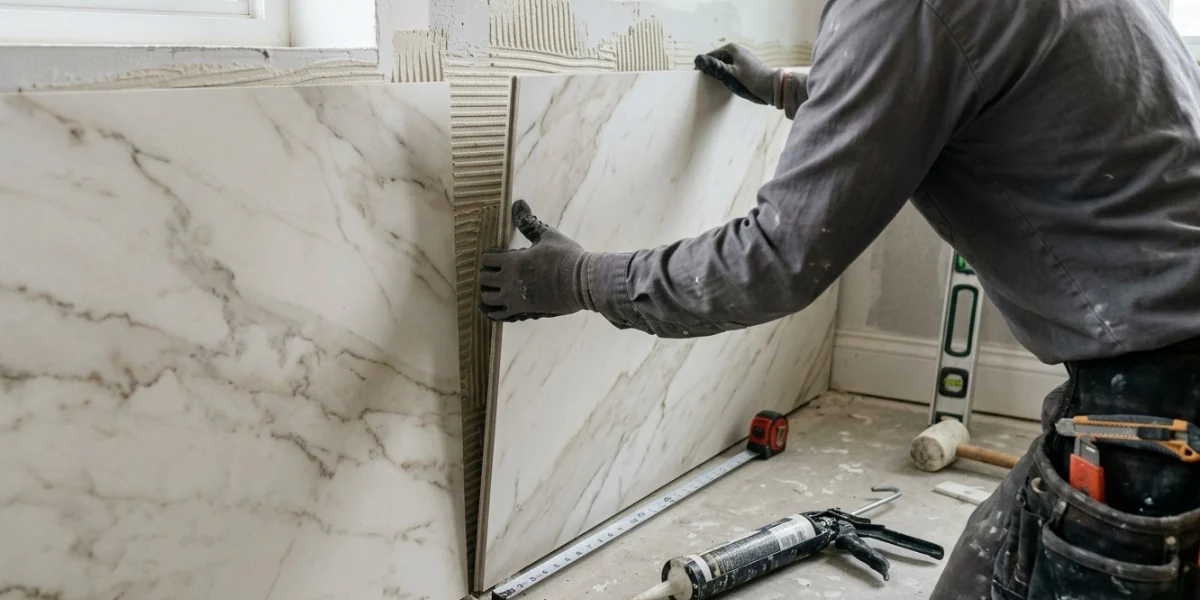
SPC wall panel installation typically begins with measuring the wall, checking the substrate, planning the panel layout and cutting panels to fit. Installers then apply the specified adhesive or use the compatible fixing system. Careful alignment is important to achieve consistent joints and a neat finish around corners, openings and fixtures.
Ceramic tile installation usually involves preparing the substrate, planning the tile layout, applying suitable tile adhesive, positioning each tile and checking alignment. After the adhesive has reached the required stage, installers fill the joints with grout and complete the necessary finishing work.
For both materials, the substrate must be stable, clean and suitable for the chosen installation system. Uneven walls may require correction before work begins. Existing tiles should not automatically be covered with new panels or tiles without checking adhesion, surface condition, moisture and compatibility.
For more detailed guidance, see our SPC wall panel installation guide.
Joint Treatment and Waterproofing
Joint treatment is another important consideration, particularly in bathrooms, kitchens and other areas exposed to moisture.
SPC wall panels can create a relatively continuous decorative surface, especially when larger panels are used. However, installers still need to manage panel connections, internal and external corners, edges and penetrations. Appropriate profiles, sealants or other finishing components should be selected according to the product manufacturer’s instructions.
Ceramic tiles generally have visible grout lines between individual tiles. These joints need proper filling and maintenance. Flexible movement joints may also be required at corners, changes of plane and other specified locations.
Neither panel joints nor tile grout alone should be assumed to provide complete waterproofing. In wet areas, the wall assembly may require a suitable waterproofing membrane and carefully detailed connections around showers, baths, pipes and other penetrations.
Before selecting either material for a bathroom, confirm that the product and installation system are suitable for the intended exposure. Our guide to SPC wall panels for bathrooms explains additional application considerations.
Maintenance and Long-Term Repair
Both SPC wall panels and ceramic tiles can be practical choices for everyday interiors, but their maintenance requirements differ.
SPC wall panels typically have smooth surfaces that can be cleaned with a soft cloth, water and a compatible mild cleaner. Abrasive pads and harsh chemicals should be avoided unless the manufacturer confirms they are suitable. Panel joints and sealed edges should also be inspected periodically, particularly in moisture-prone areas.
Ceramic tiles are generally easy to wipe clean. However, grout can accumulate dirt, discolor or deteriorate over time, depending on the grout type, cleaning routine and environmental conditions. Periodic grout maintenance may therefore be necessary.
Repairs depend on the type and location of damage. A damaged SPC panel may require partial or full panel replacement, which can be more difficult if the installation system does not allow easy removal. Damaged ceramic tiles can sometimes be replaced individually, although removing them without affecting surrounding tiles or waterproofing may require careful work.
Regular inspection and appropriate cleaning help maintain the appearance of either wall finish.
Which Material Is Better for Your Renovation Project?
SPC wall panels may be worth considering when a project prioritizes decorative continuity, relatively straightforward installation and reduced grout-line maintenance. They can suit selected residential renovations, hotel interiors, feature walls and commercial spaces, provided the product meets the application’s requirements.
Ceramic tiles may be preferable when a project requires a particular tile format, traditional tiled aesthetics, established detailing methods or a finish specified by the designer. They also offer considerable flexibility in creating patterns and combining different sizes.
For bathrooms and other wet areas, the decision should consider more than the visible surface. Waterproofing, joint details, substrate preparation and product suitability remain essential regardless of the chosen finish.
Before making a decision, compare the complete installed cost, including substrate preparation, installation materials, labor, finishing components and future maintenance. A lower number of installation steps does not automatically mean a lower total project cost.
Frequently Asked Questions
Are SPC wall panels faster to install than ceramic tiles?
They can be faster to install in suitable projects because they may involve fewer individual placement and grouting steps. However, actual installation time depends on wall preparation, panel size, cutting requirements and the specified fixing system.
Can SPC wall panels be installed over existing ceramic tiles?
Some systems may permit installation over existing tiles if the surface is firmly bonded, sufficiently flat, clean, dry and compatible with the installation method. Loose tiles, moisture problems and uneven surfaces must be addressed first.
Are SPC wall panels suitable for bathrooms?
Selected SPC wall panels may be suitable for bathroom applications when the product and installation system are designed for the intended environment. Wet-area waterproofing and proper sealing remain important, especially around showers and baths.
Choose the Right Wall Finish for Your Project
Choosing between SPC wall panels and ceramic tiles requires balancing installation requirements, appearance, maintenance and the demands of the space. Reviewing these factors before renovation begins can help avoid unnecessary delays and unsuitable material choices.
Explore YPRO SPC wall panels to review available decorative options for your next interior project. Contact our team to discuss product specifications and find a suitable solution for your renovation needs.