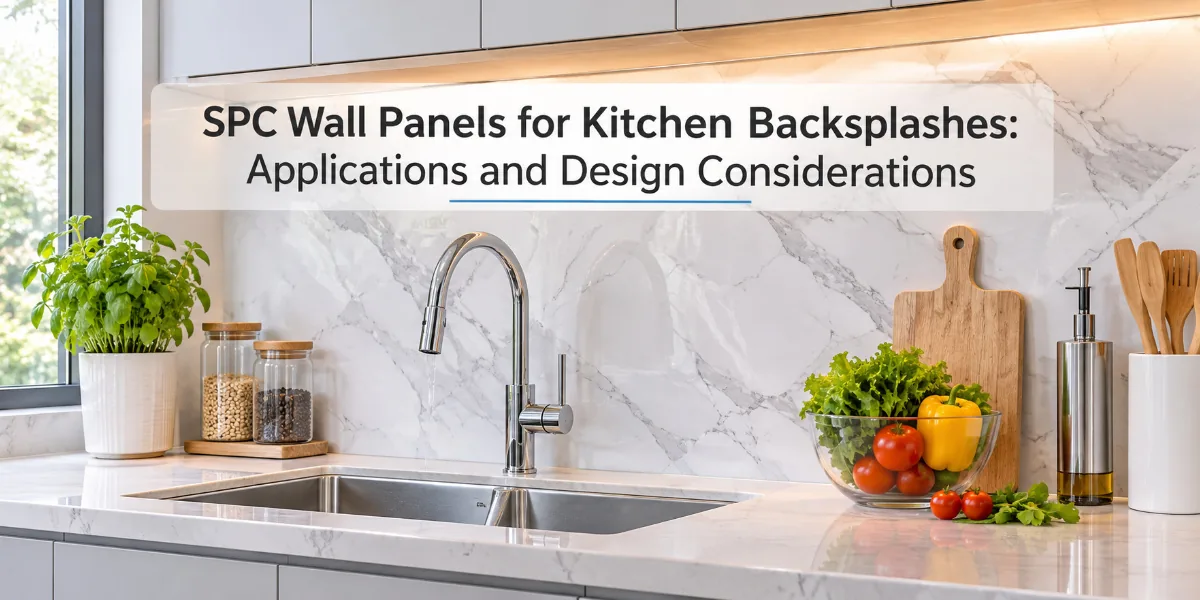
Kitchen backsplashes protect wall surfaces from cooking splashes, grease, moisture, and everyday stains. When choosing a decorative wall covering, homeowners, contractors, and project buyers often look for a material that combines attractive designs with easy maintenance. SPC wall panels for kitchen backsplash applications offer an alternative to traditional tiles, particularly in areas where moisture resistance and a seamless appearance are important.
However, choosing SPC wall panels for kitchen backsplash applications involves more than considering water resistance. Heat from cooking appliances, grease buildup, and joints around sinks and countertops must also be evaluated.
Where Can SPC Wall Panels Be Used in Kitchens?
SPC wall panels are made from a rigid composite core containing mineral powder and PVC, with decorative and protective surface layers. Their water-resistant construction makes them suitable for selected indoor kitchen applications.
Common installation areas include:
- Countertop backsplashes: Wall surfaces between kitchen countertops and upper cabinets.
- Sink areas: Walls exposed to occasional water splashes during washing and food preparation.
- Kitchen feature walls: Decorative surfaces that complement cabinets, countertops, and other interior finishes.
- Side walls: Areas away from direct exposure to cooking flames and excessive heat.
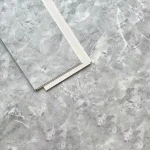
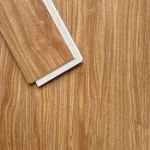
SPC wall panels can create a consistent decorative finish across different kitchen areas. Available designs, including marble, stone, wood grain, and solid colors, provide flexibility for residential and commercial interior projects.
For product specifications, thickness options, surface finishes, and installation systems, explore YPRO SPC Wall Panels.
Are SPC Wall Panels Easy to Clean in Kitchens?
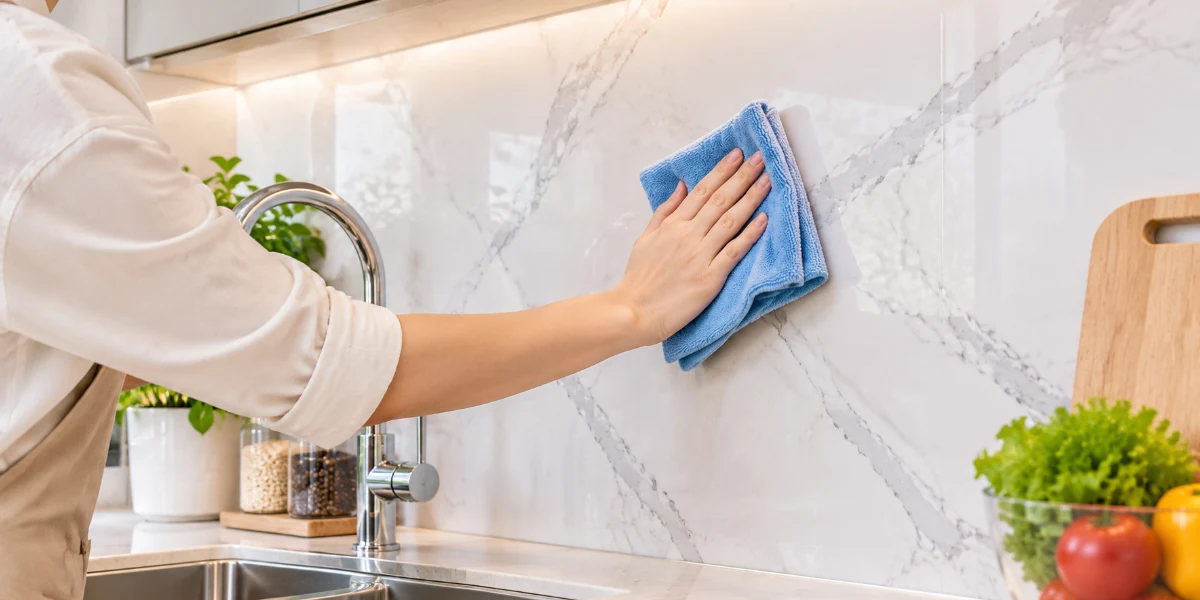
Kitchen walls are regularly exposed to cooking oil, food splashes, fingerprints, and dust. Compared with traditional wall finishes that have numerous grout lines, SPC panels generally offer a smooth surface that is easier to wipe.
For routine maintenance, use a soft microfiber cloth with warm water and a mild, neutral cleaning solution. For light grease stains, apply a compatible mild degreasing cleaner to the cloth and gently wipe the affected area. Remove any remaining cleaning solution with a clean damp cloth.
Avoid abrasive pads, steel wool, strong solvents, and highly concentrated chemical cleaners unless the manufacturer confirms their compatibility with the panel’s surface coating.
Regular cleaning is particularly important behind food preparation areas, where grease can accumulate over time. For more detailed maintenance instructions, see our guide on how to clean SPC wall panels.
How Should Joints Around Kitchen Sinks and Countertops Be Sealed?
Although SPC panels offer water-resistant performance, the complete wall installation still depends on properly finished joints and edges.
Areas around kitchen sinks and countertops require particular attention because water can enter through poorly sealed connections.
Before installation, consider the following details:
- Countertop connections: Seal the joint between the bottom edge of the wall panel and the countertop using a compatible sealant.
- Sink surroundings: Pay attention to areas where water may splash or collect, especially behind faucets.
- Internal corners: Use suitable corner profiles or the manufacturer’s recommended sealing system.
- Pipe and outlet openings: Measure cutouts accurately and seal exposed gaps with compatible materials.
A suitable neutral-cure silicone sealant may be used where recommended by the panel manufacturer. The sealant should be compatible with both the panel surface and the adjacent materials.
Inspect these connections periodically. If the sealant cracks, separates, or loses adhesion, repair it promptly to reduce the risk of water entering behind the panels.
Can SPC Wall Panels Be Installed Behind a Stove?
Heat exposure is one of the most important limitations when considering SPC wall panels for kitchen backsplash projects.
Water resistance should not be confused with heat resistance. Although SPC panels are designed for indoor wall applications, their PVC-based core and decorative surface layers are not intended for direct exposure to open flames or prolonged excessive heat.
High temperatures may cause softening, discoloration, surface deterioration, or dimensional changes, depending on the product construction and exposure conditions.
For kitchen installations, buyers and contractors should follow these precautions:
- Avoid exposing SPC panels to direct flames or hot cookware.
- Do not assume that a waterproof or fire-classified panel is suitable for installation directly behind a gas burner.
- Check the manufacturer’s heat-resistance test results and installation restrictions before specifying panels near cooking appliances.
- Where additional heat protection is required, consider suitable non-combustible materials such as stainless steel, enamel-coated panels, or ceramic tiles, subject to appliance instructions and local building requirements.
The required clearance and protection method depend on the appliance type and manufacturer specifications. Do not assume that one installation distance is suitable for every kitchen.
For distributors and project buyers, confirming the product’s technical documentation before ordering is particularly important.
How to Match SPC Backsplash Panels with Kitchen Cabinets
Besides practical performance, appearance is another important consideration when selecting SPC kitchen wall panels.
The right color and surface pattern can help create a coordinated kitchen interior.
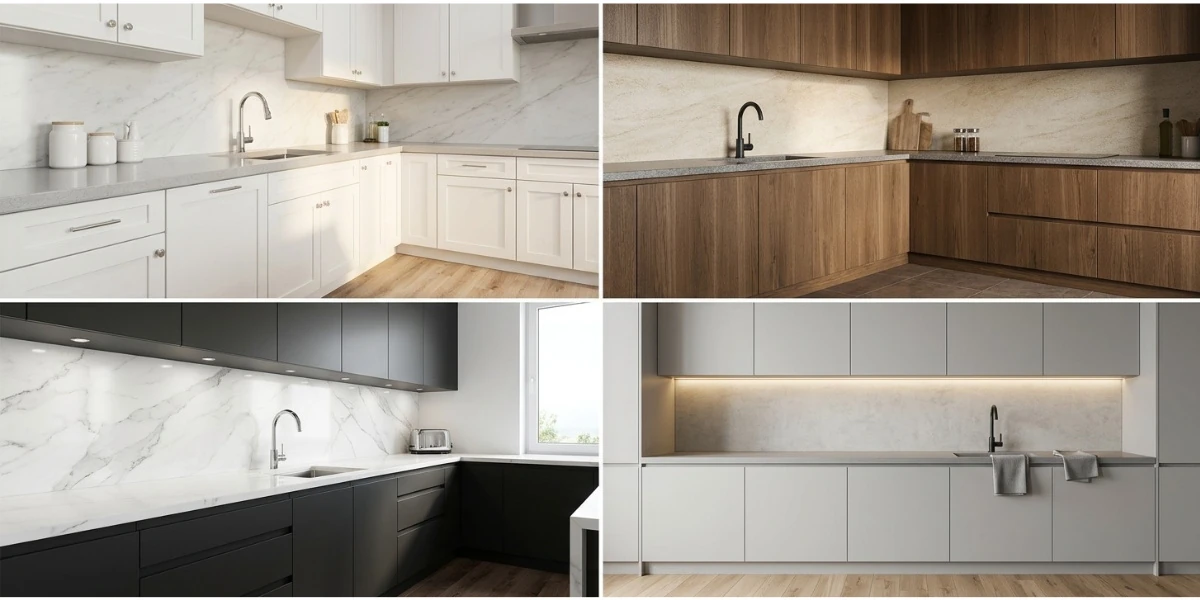
- White cabinets: Light marble or soft grey stone patterns create a clean, bright appearance.
- Wood-grain cabinets: Beige, cream, and warm stone finishes complement natural wood tones.
- Dark cabinets: Light-colored marble or neutral solid finishes provide visual contrast.
- Modern minimalist kitchens: Simple textures and understated colors help maintain a consistent design.
When selecting decorative finishes for larger projects, buyers should review physical samples under different lighting conditions. This helps confirm color consistency and ensures the selected design works with the cabinets, countertops, and flooring.
What Should Buyers Check Before Choosing SPC Kitchen Wall Panels?
For importers, distributors, contractors, and project developers, selecting the right product involves more than comparing decorative patterns.
Before placing an order, consider these points:
- Panel specifications: Confirm thickness, dimensions, core construction, and surface finish.
- Heat-related limitations: Request available test documentation and installation recommendations for areas near cooking appliances.
- Surface performance: Check cleaning compatibility and resistance to common household stains.
- Installation requirements: Confirm the recommended adhesive, substrate conditions, joint treatment, and expansion clearances.
- Product samples: Evaluate the actual surface appearance, color, and edge quality before approving bulk production.
It is also important to confirm whether the selected panel system is suitable for the intended kitchen application rather than relying on general product descriptions.
Conclusion
Choosing SPC wall panels for kitchen backsplash projects offers buyers a practical decorative solution for selected kitchen wall areas, combining water resistance, easy maintenance, and versatile surface designs.
However, proper application requires attention to grease maintenance, joint sealing, and heat exposure. In particular, SPC panels should not be treated as direct protection against open flames or excessive cooking temperatures.
At YPRO Flooring, we provide SPC wall panels in different thicknesses, dimensions, and decorative finishes for international buyers. Contact our team to discuss product specifications, available designs, samples, and wholesale supply options for your next project.