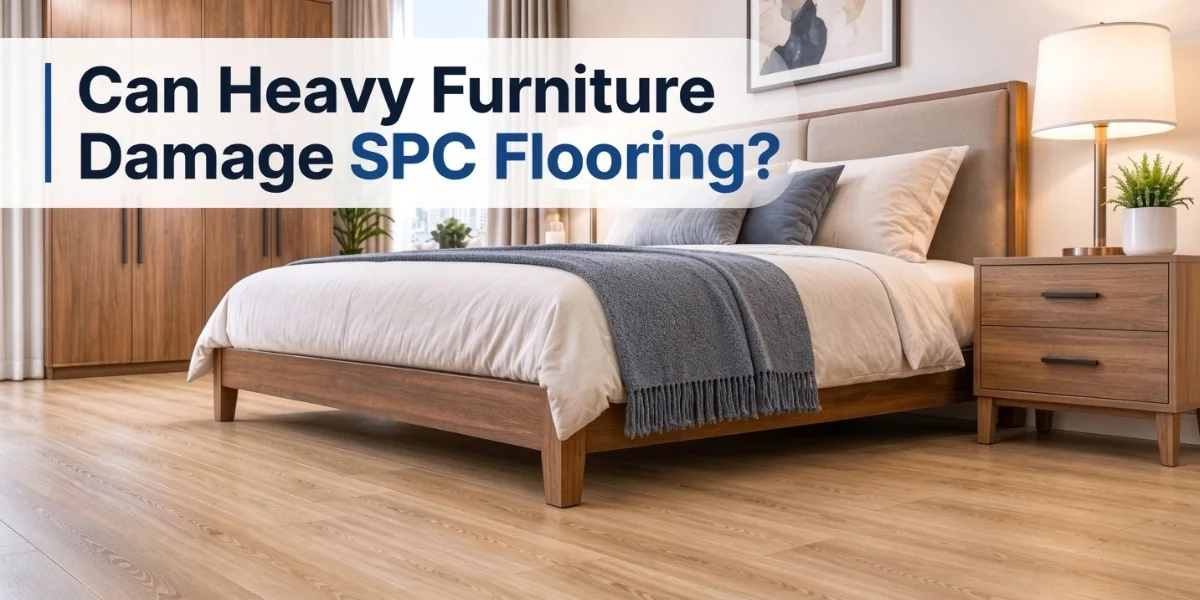
Heavy furniture is a common concern when choosing flooring for hotels, offices, retail stores, and residential interiors. SPC flooring indentation resistance is an important factor to consider, especially in spaces where heavy furniture remains in place for long periods. Although SPC flooring has a rigid, dense core designed to provide structural stability, prolonged pressure can still cause indentation under certain conditions.
Understanding SPC flooring indentation resistance helps importers, distributors, and commercial project buyers evaluate whether a flooring product is suitable for areas with heavy furniture and concentrated loads.
So, can heavy furniture damage SPC flooring? The answer depends on the flooring construction, furniture weight, contact area, installation quality, and duration of the load.
1. Can Heavy Furniture Leave Marks on SPC Flooring?
SPC flooring is manufactured using limestone powder, PVC resin, and stabilizing materials. Its rigid core provides a firm structure that helps resist everyday pressure and impact.
However, no flooring product is completely immune to indentation. Heavy wardrobes, hotel beds, office cabinets, and display units can create concentrated pressure on small areas of the floor.
When furniture legs have a narrow contact surface, the weight is distributed over a smaller area, increasing the pressure applied to the flooring.
The result may include temporary surface deformation or permanent indentation, depending on the load and product performance.
For this reason, buyers should evaluate the complete flooring construction rather than assuming that all SPC products offer the same resistance to heavy furniture.
2. What Affects SPC Flooring Indentation Resistance?
Several factors influence the indentation performance of SPC flooring.
SPC Core Composition and Density
The rigid core plays an important role in the structural performance of SPC flooring. Its composition, density, and manufacturing consistency can influence how the product responds to concentrated loads.
Overall Flooring Thickness
SPC flooring is available in different thicknesses, but a thicker plank does not automatically provide better indentation resistance. Buyers should evaluate the core construction and relevant test results alongside overall thickness.
For a detailed comparison, see our guide to SPC Flooring Thickness.
Subfloor Flatness and Support
Even a well-manufactured SPC product may experience problems when installed over an uneven or poorly prepared subfloor. Unsupported areas can create additional stress when heavy furniture is placed above them.
Proper subfloor preparation is therefore essential for achieving reliable flooring performance.
Furniture Contact Area
Furniture legs with small contact surfaces concentrate weight in specific locations. Wider furniture feet or suitable protective pads help distribute pressure over a larger area.
3. Static Load vs. Impact Load: What’s the Difference?
When evaluating SPC flooring indentation resistance, it is important to distinguish between static loads and impact loads.
| Load Type | Typical Example | Main Consideration |
|---|---|---|
| Static load | Beds, wardrobes, office cabinets | Continuous pressure over time |
| Impact load | Dropped objects or furniture impacts | Short-duration concentrated force |
Static loads occur when heavy furniture remains in the same position for extended periods. This situation is particularly relevant to hotel rooms, offices, and retail environments.
Impact loads occur when an object strikes the floor suddenly. The resulting damage depends on the impact force, object shape, and flooring construction.
These two conditions represent different performance requirements. A product’s resistance to one type of load should not automatically be treated as proof of its resistance to the other.
4. How Can Furniture Pads Reduce Pressure on SPC Flooring?
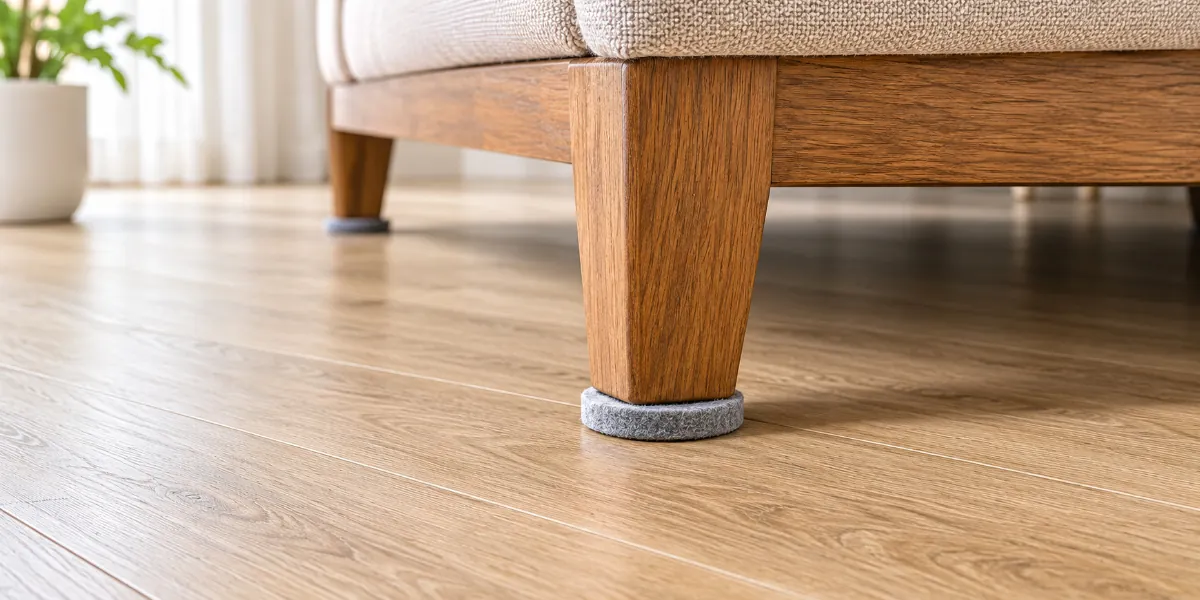
Furniture protection is a practical way to reduce the risk of indentation.
For projects using SPC flooring, consider the following measures:
- Use furniture pads: Felt or suitable protective pads can help distribute pressure and reduce direct contact between furniture legs and the flooring surface.
- Choose wider furniture feet: A larger contact area helps spread the furniture’s weight.
- Avoid sharp metal edges: Narrow or damaged furniture feet may create concentrated pressure or scratch the surface.
- Lift furniture when moving: Avoid dragging heavy wardrobes, beds, and cabinets directly across the floor.
- Check furniture placement: Pay particular attention to large items that remain in the same position for long periods.
These measures cannot eliminate every risk, but they can help reduce localized pressure and surface damage during normal use.
5. How to Test SPC Flooring Indentation Resistance?
For professional buyers, visual inspection alone is not enough to determine whether a product can withstand heavy furniture.
A more reliable approach is to review relevant indentation test results and technical documentation.
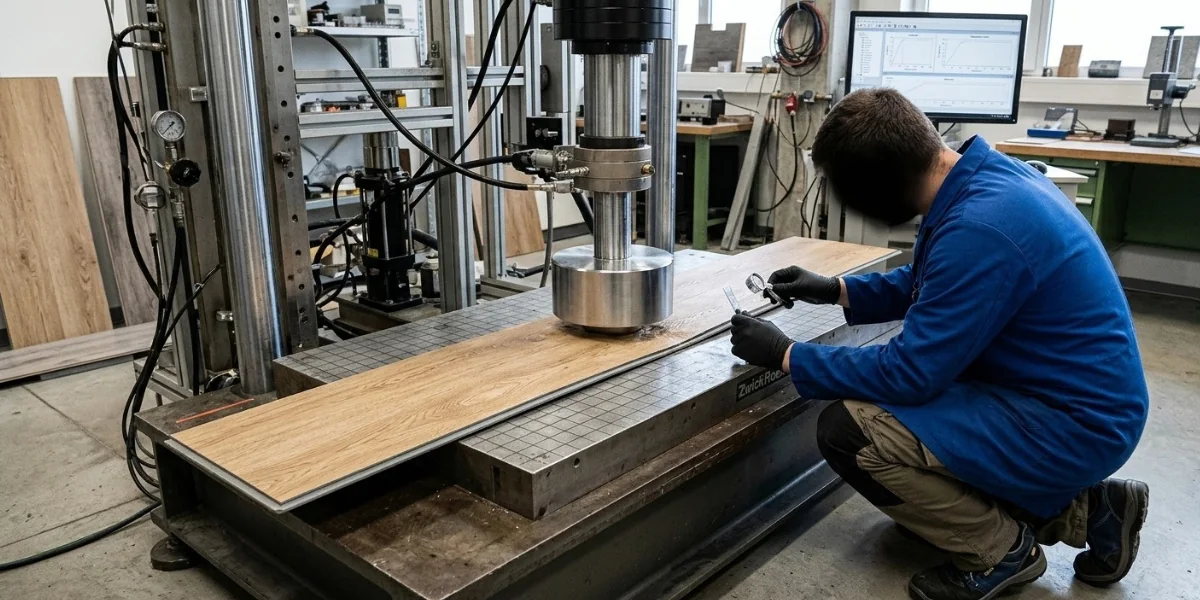
One important measurement is residual indentation, which evaluates the permanent deformation remaining after a specified load has been applied and removed.
When reviewing test reports, buyers should check:
- The testing method and applicable standard.
- The applied load and loading duration.
- The measurement conditions before and after testing.
- The residual indentation results.
- Whether the tested product matches the proposed commercial specification.
It is also important to distinguish indentation testing from abrasion and impact testing. These measurements evaluate different aspects of flooring performance.
For a broader pre-shipment inspection process, read our guide to SPC Flooring Quality Inspection.
6. How Should Commercial Buyers Evaluate Furniture Loads?
Hotels, offices, retail stores, and other commercial environments often contain large furniture units that remain in fixed positions.
Before selecting SPC flooring for these applications, buyers should consider several project-specific factors.
First, estimate the furniture load. Identify the approximate weight of large furniture items and determine how many supporting feet or contact points distribute the load.
Second, evaluate the contact area. Furniture with narrow legs may create greater localized pressure than furniture with wider supporting bases.
Third, check the installation conditions. Confirm that the subfloor is sufficiently flat, stable, and prepared according to the manufacturer’s installation instructions.
Finally, request technical documentation. Ask the supplier for relevant indentation resistance test reports and confirm that the tested product construction matches the flooring specified for the project.
For buyers comparing different rigid-core products, our article on SPC Flooring vs. WPC Flooring provides additional information about their core construction and performance differences.
7. How to Choose SPC Flooring for Heavy Furniture Applications?
Choosing SPC flooring for heavy furniture applications requires more than comparing total plank thickness.
Buyers should review the SPC core construction, overall thickness, wear layer, locking system, and relevant performance test results together.
YPRO offers SPC flooring in 4mm, 5mm, 6mm, and 8mm thicknesses, with wear layer options ranging from 0.2mm to 1.0mm. These specifications provide different options for residential and commercial flooring projects.
However, the appropriate product should always be selected according to the expected furniture loads, installation conditions, and project performance requirements.
Conclusion
Heavy furniture can leave indentations on SPC flooring under certain conditions, particularly when substantial weight is concentrated over small contact areas for extended periods.
Understanding SPC flooring indentation resistance helps buyers evaluate product performance, compare technical specifications, and select suitable flooring for hotels, offices, retail stores, and other commercial applications.
At YPRO, we provide SPC flooring solutions with different thicknesses and wear layer specifications for various project requirements. Explore our SPC Flooring collection or Contact YPRO to discuss your project specifications, request product samples, and find a suitable flooring solution.